 Customers are ordering more than ever, and they expect brands to reduce emissions at the same time. For delivery businesses, that puts the spotlight firmly on last-mile operations. Carbon-neutral delivery is quickly becoming a basic requirement. The upside is that carbon-neutral delivery can also make your network leaner and more profitable.
Quick Navigation
What does carbon-neutral delivery mean?
Carbon-neutral delivery means balancing out the emissions created by each parcel so that the overall impact on the climate is zero over time. First, you reduce emissions as much as possible through better vehicles, smarter routes and greener packaging. Then, you compensate for the remaining emissions by investing in verified climate projects such as reforestation or renewable energy.
Last-mile delivery creates a disproportionate share of logistics emissions compared to the distance it covers. Vans stuck in traffic, repeated failed deliveries and half-empty vehicles all drive up fuel use and emissions. For urban areas already struggling with congestion and air quality, carbon-neutral delivery is a practical way to keep serving customers without adding to the problem.
Why carbon-neutral delivery matters for your business
Regulations around transport emissions are tightening across Europe and beyond. Cities are rolling out low-emission zones, limiting access for older vehicles and introducing new charges. The more your operation moves toward carbon-neutral delivery, the less exposed you are to sudden regulatory changes and rising costs such as congestion charges or fuel duties.
Customers are also paying close attention. You have probably already seen more shoppers asking about greener options at checkout. Industry research shows that clear, sustainable delivery choices at the point of purchase can increase conversion and loyalty. For B2B contracts, sustainability performance is often part of tender scoring, which means your carbon strategy can influence new business wins.
There is also a hard cost angle. Sustainable practices push you to remove waste from your network. Fewer failed deliveries, better-filled vehicles and shorter average routes all lower the cost per stop. In this way, carbon-neutral delivery supports both your environmental goals and your margin.
Practical carbon-neutral delivery solutions
So how do you move from good intentions to day-to-day change on the road and at the depot? Here are some of the most effective carbon-neutral delivery solutions that operators of any size can start working on.
1. Electrify the fleet, one route at a time
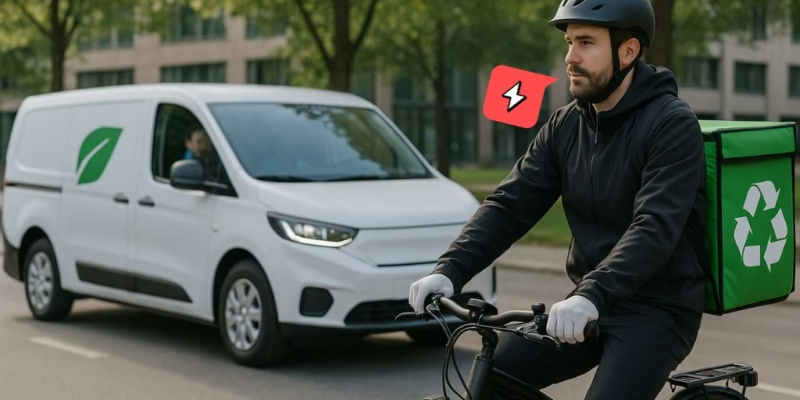
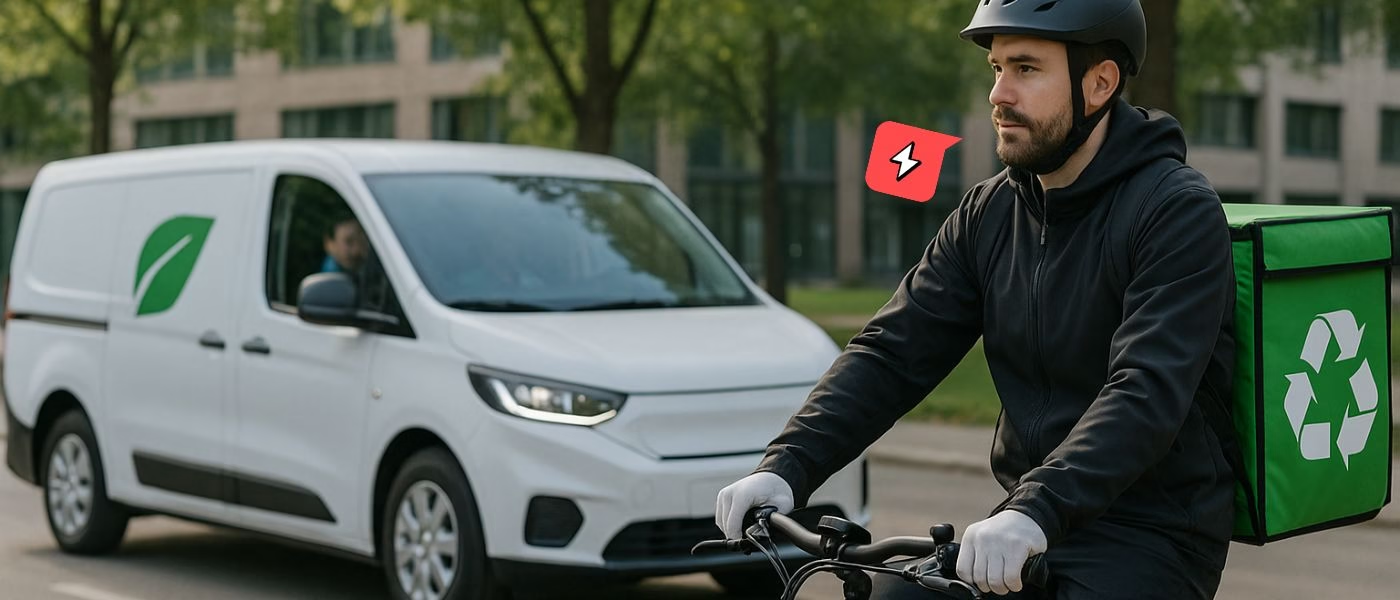
You do not need to replace your entire fleet overnight. Start with short urban routes that are perfect for electric vans or e-cargo bikes. These areas often suffer most from pollution and congestion, so each electric route has an outsized impact.
2. Use technology to cut empty miles
Modern route optimisation tools can reduce unnecessary mileage by grouping deliveries more intelligently, planning around real-time traffic and cutting failed delivery attempts. Even small improvements in route efficiency, multiplied over hundreds of daily stops, bring you much closer to genuine carbon-neutral delivery.
3. Rethink your network with local hubs
Locating stock closer to customers reduces average trip distance and enables alternative transport modes like bikes or walking couriers. Micro-fulfilment centres or dark stores within dense neighbourhoods can act as springboards for ultra-local, low-carbon deliveries.
4. Make packaging pull its weight
Oversized boxes filled with air cushions waste money and space in the vehicle. Right-sized packaging and lighter, recycled materials create more room per route and trim the emissions per parcel. For truly carbon-neutral delivery, every part of the journey, including packaging, needs to do its share of the work.
5. Offset responsibly, not as a shortcut
Offsets should be the last step, not the first. Once you have worked on vehicles, routes, hubs and packaging, you can calculate the remaining emissions and compensate through high-quality offset projects. Look for schemes with clear certification and transparent reporting.
6. Bring drivers and riders into the plan
Drivers and riders are the everyday face of your carbon-neutral delivery promise. Train them on eco-driving techniques like smooth acceleration, smart idling and better route awareness. Encourage feedback on traffic hotspots or building access issues.
Building a realistic roadmap
Moving to carbon-neutral delivery is a journey, not a single project. Start with an emissions baseline so you know where your hot spots are: vehicle types, route patterns, depot locations and failed delivery rates. Then set clear, time-bound targets that your team can understand and work toward.
From there, design a roadmap made of small, testable steps. Pilot electric vehicles on one city route. Trial a micro hub in a neighbourhood with heavy order density. Test greener packaging with a subset of SKUs. Measure the impact, gather feedback from customers and drivers, then scale up what works.
Conclusion
Carbon-neutral delivery solutions are quickly moving from innovation to expectation. Customers, regulators and city authorities are all pulling in the same direction. The businesses that act now will lock in an advantage: lower operating costs, stronger brand reputation and easier compliance with future rules.
You do not need to have all the answers on day one. What matters is committing to the direction, involving your team and partners, and turning big climate goals into everyday delivery habits. Step by step, route by route, you can build a carbon-neutral delivery operation that keeps customers happy and keeps your footprint in check.