
Takeaway delivery is paid per drop, not per hour, so the question in the title has no single honest answer. What it has is a range, a list of costs that come out of that range, and a set of habits that move you up or down inside it. That is what this guide covers, for the UK platforms, in that order.
Most of the hourly figures that circulate online are aggregator estimates, and many of them sit below what an employed job could legally pay. That is not a scandal. It is what happens when you average self-employed revenue across busy and dead hours and call it a wage.

What a takeaway delivery driver does
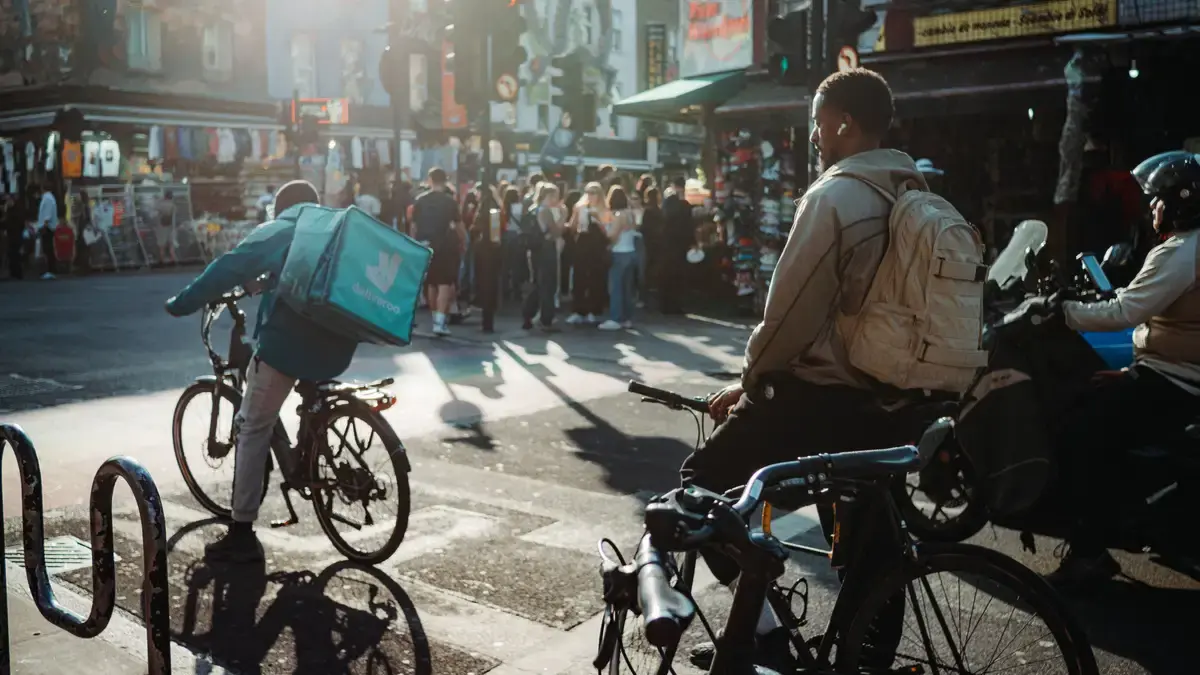
You collect orders from restaurants and deliver them to customers nearby, usually within a mile or three, using your own bicycle, moped or car. On the app platforms you are self-employed: you log on when you want, accept or decline orders, and are paid for each one you complete.
To start you need to be at least 18, have the right to work in the UK, and pass the platform's background check. Car and moped couriers need a full licence and insurance that covers delivery work. Cyclists need neither. No qualification is required beyond that, which is why this is the most accessible driving work there is, and also why the pay has no floor.
What takeaway delivery pays per hour
Because none of the three main platforms publishes a rate, the figures below are indicative revenue per active hour, drawn from aggregator data and courier community reports rather than from the platforms themselves.
| Platform | Indicative revenue per active hour |
|---|---|
| Just Eat | £8 to £13 |
| Deliveroo | £8 to £14 |
| Uber Eats | £9 to £15 |
Two things apply to every figure in that table, and they are the reason it is a range rather than a salary.
Every one of those bands dips below the £12.71 National Living Wage at the bottom end, and that is the honest shape of the work, not a flaw in the data. If the orders do not come, the hour pays what it pays.
What moves you up the band is order density, not effort. A rider working a busy city centre at dinner time is paid for more drops in the same hour than a rider covering a market town. That is also why a single national average is misleading enough that we do not publish one.
The exception to all of this is employed takeaway work. A Domino's or Pizza Hut driver is on the payroll at or above the legal floor, with tips and mileage on top, and a quiet Tuesday still pays. Our guide to Domino's driver pay covers that model, and the difference between the two is the real choice most takeaway applicants are making.
What comes out of it
The gap between gross and net is where car drivers and cyclists part ways.
On a car or moped, hire and reward insurance is mandatory, because standard personal cover excludes paid delivery. For a car that is £800 to £1,500 a year, or roughly £3 to £6 off every working day before you have moved. Fuel on a busy evening shift adds several pounds more. Our insurance cost guide has the bands by vehicle.
On a bicycle or e-bike, there is no fuel and no hire and reward. Public liability cover at £50 to £200 a year is the only policy, and it is optional on most platforms. That is why a city cyclist on a smaller gross often keeps more than a car driver on a larger one.
On any vehicle, you register with HMRC as self-employed and file a tax return. Mileage is claimable: for the 2026 to 2027 tax year the simplified rate is 55p a mile for the first 10,000 business miles in a car or van and 25p after that, and 24p a mile on a moped or motorcycle. Keep the log from your first shift.
Part time or full time
Part time is the common shape: ten to fifteen active hours a week, concentrated on the lunch and dinner peaks, around another job or a course. Worked that way, you are choosing the best hours of the week and the bands above are a fair guide to what they pay.
Full time means filling Monday lunchtime and Tuesday afternoon as well, and those hours pay what they pay. No platform publishes a weekly figure, so the only honest way to estimate one is arithmetic: multiply the band for your platform by the active hours you expect, not the hours you plan to be logged on, then take off fuel, insurance, vehicle wear and a tax reserve.
That distinction between logged-in and active is where most weekly estimates go wrong. Waiting between orders does not pay, so forty hours logged on is not forty hours earning, and the gap is widest outside the peaks. Before going full time, work two or three ordinary weeks with the quiet days included and use that number, not a Friday night's.
How to lift your effective rate
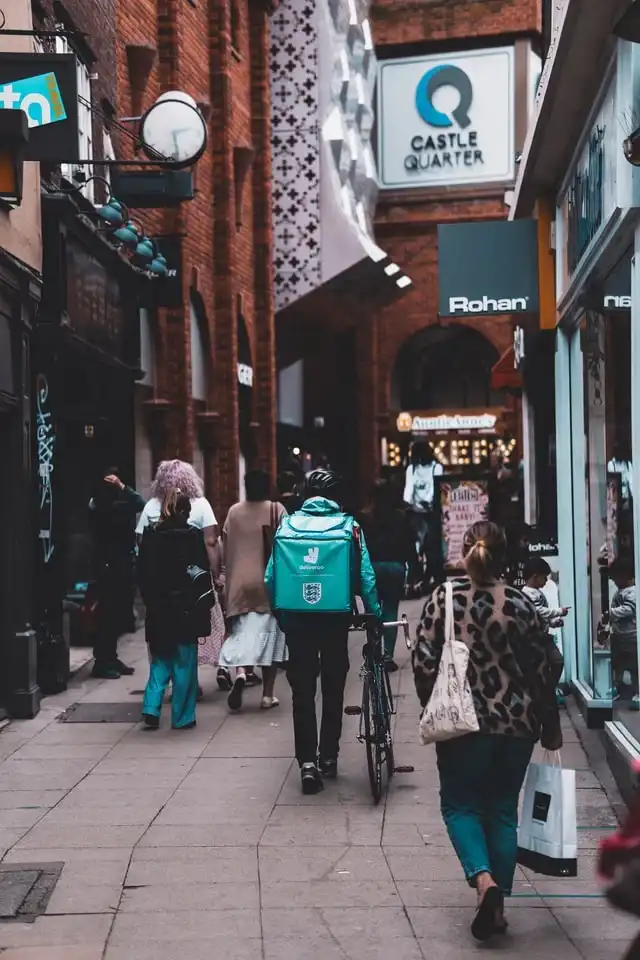
- Work the peaks. Lunch, roughly 12pm to 2pm, and dinner, roughly 6pm to 9pm, with Friday and Saturday evenings the busiest blocks of the week.
- Stay dense. City centres, university areas and business districts have the most restaurants per square mile, which is the number that predicts drops per hour.
- Run two apps. Holding accounts on Uber Eats and Deliveroo, say, and taking whichever order lands first cuts the dead time between drops. It is allowed on every platform.
- Log off in the dead hours. Sitting online through a quiet afternoon earns nothing while your costs continue.
- Know your patch. Shortcuts, restaurant pickup points and which kitchens are slow save minutes on every drop.
- Be decent at the door. Ratings and tips both follow from it, and on some platforms a high rating unlocks priority access to orders.
- Track your own number. After a few weeks you will know what an hour is worth in your zone better than any guide, this one included. Our post on the best time of day to deliver goes into the timing in detail.
Is it worth it?

If you want control of your week and can start within days, yes, with the costs understood. You choose your hours, you can work several apps at once, and there is no CV, no interview and no boss.
If you need a predictable income, the same facts cut the other way. There is no sick pay, no holiday pay and no floor under a wet Tuesday, and on a car the insurance bill lands whether you work fifteen hours or forty. For most people the honest position is that takeaway delivery is a good part-time earner and a demanding full-time one, and that which platforms you run matters less than when and where you run them. For the wider comparison, including the parcel networks, see our guide to the best delivery driver jobs in the UK.
Frequently asked questions
How much do takeaway delivery drivers make per hour in the UK?
Indicatively £8 to £15 per active hour before costs, depending on the platform and how dense your area is. Just Eat sits at £8 to £13, Deliveroo £8 to £14 and Uber Eats £9 to £15. These are revenue figures from aggregator and courier community reporting, not wages, and no minimum wage sits underneath a quiet shift.
Is takeaway delivery paid per hour or per delivery?
Per delivery. Just Eat, Deliveroo and Uber Eats all pay a fee per completed drop, set by distance and demand, with tips and any promotions on top. Time spent waiting for an order is unpaid, which is why an hourly figure is only ever an effective rate.
Do takeaway delivery drivers get the minimum wage?
Not on the app platforms. Couriers there are self-employed, so the National Living Wage of £12.71 an hour does not apply and a quiet shift pays only what the orders pay. Employed takeaway drivers at chains such as Domino's are the exception: they are paid hourly at or above the legal floor.
What costs come out of takeaway delivery pay?
Fuel or charging, hire and reward insurance on a car or moped, vehicle wear, phone data and a reserve for your tax bill. On a car, hire and reward alone is £800 to £1,500 a year, roughly £3 to £6 off every working day. Cyclists carry far less: public liability cover costs £50 to £200 a year and there is no fuel.
How can a takeaway driver earn more per hour?
Work the lunch and dinner peaks, stay in the densest restaurant zone you can reach, run two apps at once so a quiet one does not leave you idle, and log off in the dead afternoon hours. Tracking your own earnings per active hour for a few weeks tells you more than any published band.
The short version
Per drop, no floor, and the difference between a good week and a bad one is when and where you work rather than which app. Work the peaks, run two apps, log off in the dead hours, and track your own number. New to delivery work? Start with our complete guide to becoming a delivery driver in the UK, and the form below shows who is hiring near you.