
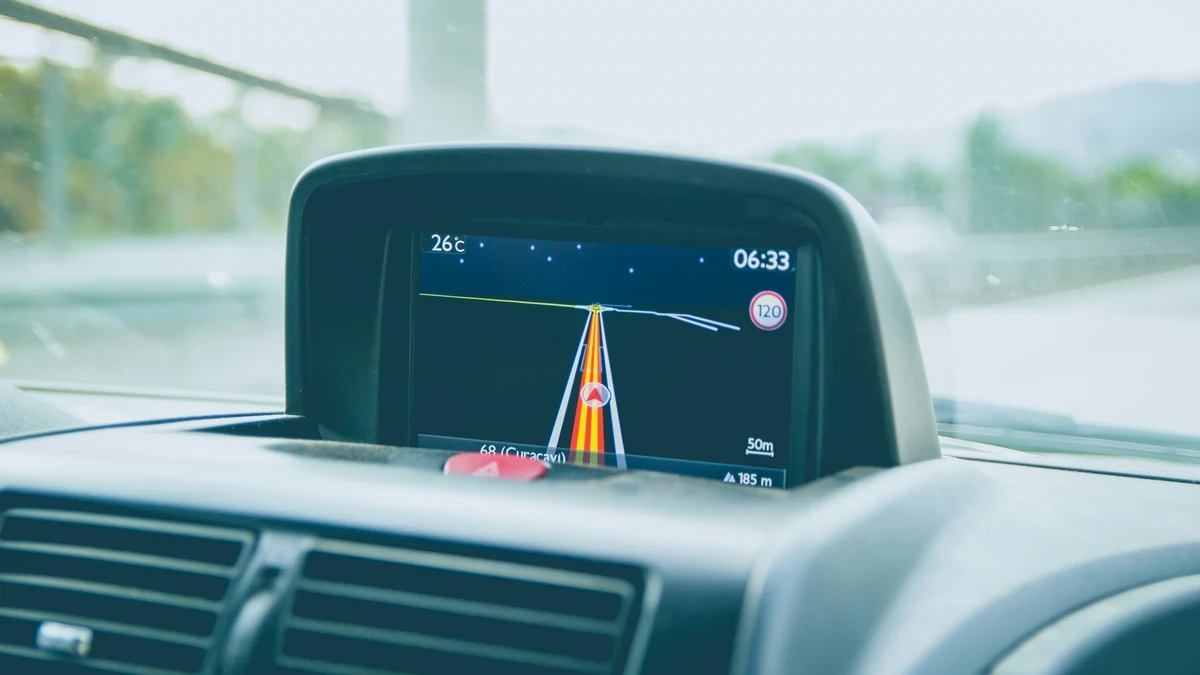
For a fleet of ten to two hundred vans, the question is not which fleet efficiency tools exist but which ones pay back before the contract renews. Every vendor deck promises double-digit savings. Few of the decks say where the number came from, and fewer still say what the tool costs in the currency a small fleet is shortest of, which is a manager's time.
This post ranks the tool categories by whether they pay back for a UK fleet of that size, cites the figures to a named source where one exists, names the tools that do not pay back and why, and ends with the one test to run before signing anything.
Start with the costs a tool can actually move
A tool is only efficient if it moves a cost you actually carry. For a UK van fleet those costs are, in rough order of size:
- Fuel, the largest variable cost and the one driving style affects directly.
- Driver time, which is either wages or, on a self-employed model, the number of rounds you can fill.
- Vehicles off the road, where the cost is the hire van plus the parcels that did not go out.
- Incidents, which are the excess, the premium loading at renewal, and the vehicle off the road again.
- Fines and charges, which in London include the ULEZ daily charge of £12.50 for a non-compliant vehicle, every day it enters the zone.
- Admin time, the cost nobody budgets and every new tool adds to.
Hold each category below against that list. If a tool cannot name which line it moves, it is a dashboard.
Telematics pays back when someone reads it
Telematics combines vehicle location with driving behaviour data: speed, harsh braking, acceleration, idling, and often fuel consumption from the engine. It is the category with the most evidence behind it, and the evidence carries a condition.
The Department for Transport's rapid evidence assessment on efficient driving reviewed 55 sources and found in-vehicle technology is generally reported to deliver a long-term reduction of 5% to 10% in fuel use, with organisational case studies showing indicative reductions of 6% to 12% among employee drivers. The same review notes that technology aimed at organisations costs more than the consumer version and carries additional costs in actively using it as a management tool.
That last clause is the whole point for a small fleet. The box in the van saves nothing. The saving comes from a manager reading the harsh-braking league table on Monday, having a coaching conversation on Tuesday and checking the number the following month. If nobody has those hours, the subscription is a tracking service, which is still worth having for theft recovery and proof of delivery disputes but should be priced as one.
Two conditions before you switch it on. Telematics data about a driver is personal data, and the ICO's monitoring workers guidance requires you to tell drivers what you collect and why, to run a data protection impact assessment before monitoring driving behaviour, and to stop monitoring when a driver uses the van privately. And if your drivers are self-employed, coaching their driving style is a form of control that bears on employment status; our driver performance post sets out where that line sits.
Route optimisation is the biggest saving in dense multi-drop
For a multi-drop fleet, routing software decides more of the fuel bill and more of the driver-hours than anything else you buy. Good optimisation takes the stops, the time windows, the vehicle capacity and the live traffic and produces a sequence that gets more drops out of the same shift. On a dense urban round, the difference between a hand-sequenced route and an optimised one is often a full drop per hour, which over a 200-drop day is the difference between finishing inside the shift and paying for the overrun.
There is a legal edge here that light van fleets tend to forget. The GB domestic drivers' hours rules apply to goods vehicles including vans: no more than 10 hours driving in a day and 11 hours on duty. A routing tool that plans a round which cannot legally be completed inside those limits is planning an offence, and a good one lets you set the limits as constraints.
In London and the other clean air zones, routing that keeps non-compliant vehicles outside the zone, or at least out of it on the days it matters, is a saving you can read straight off the charge schedule.
Route optimisation pays back fastest when the rounds are dense and the drop count is high. On a rural round with forty drops across sixty miles, the software has less to work with and the payback stretches.
Maintenance and daily checks: the cheapest tool is a form
Vehicles off the road are the cost that turns a good day into a lost one. Two tools address it and neither is expensive.
The first is a maintenance scheduler that triggers servicing on mileage or engine hours rather than on the calendar, and that holds the MOT date per vehicle with a reminder ahead of it. A van fleet without one finds out about an expired MOT the way it finds out about most things, at the roadside.
The second is a digital daily walkaround check. DVSA's guidance for van drivers says the check should be done before the journey, that DVSA can ask for a record of it at a roadside stop, and that using a van in a dangerous condition carries an unlimited fine and a possible prison sentence. A paper form in the glovebox satisfies the law. An app that timestamps the check, photographs the defect and raises the job with the workshop satisfies it and shortens the time the van spends waiting for someone to notice. For a fleet of fifty vans the app costs less than one day of hire van.
Fuel cards and fuel management
A fuel card is a payment tool with a data feed attached, and the data feed is the efficiency part. Consumption per vehicle, purchases by driver and location, and the odometer at each fill let you see which vehicles and which rounds are running above the fleet average and ask why. Linked to telematics, the same data catches the fill that did not go into the van.
On its own a fuel card saves the admin of expense claims and buys a pence-per-litre discount. Linked to the telematics feed it becomes the thing that tells you whether the coaching worked. The integration is the value; a fuel card whose data never meets the telematics data is a payment card.
Driver training as an efficiency tool
Training does not usually make the fleet-tools list, and it should, because the evidence for it is at least as good as the evidence for the hardware.
The same DfT review found that efficient driving training produces reductions in fuel use of up to 25% immediately after the training, fading to up to 6.5% for employee drivers over the long term, and that training in efficient driving correlates with reductions in subsequent accident rates of between 14% and 35%. One of its case studies, a 300-van property maintenance fleet, reported a 13% fall in its accident rate alongside the fuel saving.
The fade is the design brief. A one-day course once a year gives you the 25% for a fortnight. Short modules, repeated, tied to what the telematics is showing for that driver, hold more of it. That is what Service Club ® built the Academy around: modules of ten to fifteen minutes an operator assigns to a driver on their phone, with completion recorded against the driver profile. Assigned after a specific telematics pattern, it is the intervention that makes the telematics subscription pay.
The tools that do not pay back for a small fleet
Some categories are sold hard to small fleets and rarely return their cost at that scale.
Generic productivity and messaging apps. A driver does not need another channel. They need a route that is right and a schedule that does not change at 6am. If the tool does not connect to the operation, it is a distraction with a monthly fee.
All-in-one dashboards. A dashboard is a way of looking at data you already have. If you do not have the telematics, fuel and maintenance feeds, the dashboard is empty; if you do, you already have three dashboards. Buy the feeds, not the view.
Standalone expense trackers. An expense app that does not read the fuel card or the maintenance record adds a fourth place to type things in. The fuel card already produces the report.
Enterprise analytics. A fleet of 40 vans does not need a data warehouse. If setting up the reports takes more manager time than reading the telematics league table would, the tool costs more than it saves, whatever the licence fee.
The common failure is the same in each case: the tool adds admin time to a fleet whose scarcest resource is admin time.
The integration test before you buy
The single factor that decides whether a fleet tool pays back is whether it talks to the tools you already have. Before signing, ask the vendor four questions and make them show you, not tell you:
- Does it read the telematics feed you run, or need its own hardware?
- Does it take the fuel card data automatically, or need a monthly upload?
- Does it write to the maintenance record, or produce its own list of defects?
- Does it attach to a driver profile that your licence checks, training records and coaching notes already live on?
A tool that passes all four is part of a system. A tool that fails three of them is a new spreadsheet with a subscription. The compliance guide for growing fleets describes the driver record the fourth question is asking about, and it is the same record your insurer will ask for at renewal.
Frequently asked questions
Which fleet efficiency tool should a small fleet buy first?
The one that moves your largest controllable cost. For most multi-drop fleets that is fuel and driver time, which points at route optimisation, followed by telematics once someone has the hours to read it. If your biggest cost is vehicles off the road, buy the maintenance scheduler and the walkaround check app first.
How much fuel does telematics save?
The Department for Transport's evidence review on efficient driving reports a long-term reduction of 5% to 10% in fuel use from in-vehicle technology, with indicative case studies of 6% to 12% among employee drivers when the employer actually uses the data. The saving comes from the coaching the data enables, not from the box in the van.
Is driver training a fleet efficiency tool?
Yes, and one of the cheaper ones. The same DfT review found efficient driving training cuts fuel use by up to 25% immediately afterwards, fading to up to 6.5% over the long term for employee drivers, and that it correlates with 14% to 35% fewer subsequent collisions. The fade is the argument for short, repeated modules rather than one annual course.
Do I need to tell drivers about telematics?
Yes. The ICO treats telematics data about a driver as personal data. You have to tell drivers what is collected and why, carry out a data protection impact assessment before monitoring driving behaviour, and not use the data for a purpose you did not state. If drivers use the van privately, the monitoring stops when the shift does.
What is the integration test before buying a fleet tool?
Ask whether the tool reads from or writes to the systems you already run: the telematics feed, the fuel card, the maintenance record, the driver profile. A tool that needs its own data entry and produces its own separate report adds admin time, and for a small fleet admin time is the cost you were trying to cut.
Buy the feed, read the feed, act on the feed
Telematics, routing, a maintenance scheduler and a fuel card that talk to each other will pay back on a fleet of ten vans. A dashboard on top of nothing will not. The step most fleets skip is the last one, acting on what the data shows for one driver this week, and that is a training question. If you want to see what a module assigned after a specific telematics pattern looks like, Service Club Academy is the place to start.