


Brickell and Downtown
Brickell, Downtown, Edgewater, Little Havana, the Arts and Entertainment District

Drive passengers or deliver food, groceries and parcels, across Miami-Dade County and the surrounding areas. One signup, and you set your own hours.
TRUSTED BY THE WORLD'S LEADING LOGISTICS COMPANIES










Miami is one of the busiest driving markets in the country, for passengers and for deliveries. Whatever you drive, there is a role that fits.
Drive passengers for Uber or Lyft as an independent contractor. You pick the hours, the area and how much you work.
Deliver restaurant orders for DoorDash, Uber Eats and Grubhub. Short jobs and quick turnaround, with tips on top.
Shop and deliver grocery and retail orders for Instacart, Shipt and Spark Driver, paid per batch plus tips.
Block-based shifts delivering parcels. Book scheduled blocks and see what the block pays before you accept it.

"I had been driving for years but never knew how to get onto the bigger platforms. Service Club matched me with three companies that suit my schedule."

"The paperwork alone used to put me off. Service Club handled everything, background checks, insurance docs. Now I earn more and stress less."

"I was juggling three different delivery apps before Service Club. They set me up with a single contract and I was driving for two companies within 48 hours."
As an independent contractor you are paid per job, at the rates each company publishes, plus tips. Here is how each kind of work pays in Miami.
Figures are revenue before gas, vehicle costs, insurance and self-employment tax, not wages. Company-published ranges are national unless a row says otherwise, and any local pay rule is explained on this page. Actual earnings depend on hours worked, area covered and how many companies you sign up with through Service Club.
Service Club ® connects Miami drivers to top companies faster, for passenger work and for delivery, with less paperwork and more support.
Apply once and get matched to multiple Miami companies, for passenger driving and for delivery. No repeating the same forms across different apps.
Drive as an independent contractor: you decide when to log on, where to work and how much to take on.
Discounts on gas, food, gear, phone plans and entertainment. Built specifically for people who drive for a living.
Service Club is free for you. We earn from the companies we connect you to, never from your earnings.
No exclusivity on contractor work. Run rideshare and delivery in parallel, or pick up scheduled parcel blocks on quiet days. Your call.
Real humans you can reach when something goes wrong on the road, not just an app chatbot.
Miami is a market built for app work, fed by tourists, cruise passengers, the nightlife on the Beach and a county that orders dinner in two languages. What it cannot do is set a pay rule for any of it. Florida law says rideshare companies and their drivers are governed exclusively by the state, and bars any city or county from putting a rate, entry or operating requirement on them; a separate statute keeps minimum wages a state matter. Miami Beach tested that with a minimum wage of its own, and the Third District Court of Appeal struck it down in 2017. So there is no New York-style floor here and no local route to one: what you earn is what the companies pay, plus tips.
The state minimum wage reached $15 an hour on September 30, 2026, the last of the yearly $1 raises voters approved as Amendment 2 in November 2020. It stays there through the end of 2027, and from January 1, 2028, it moves with inflation once a year. Know what it covers, though. Florida gives the word employee its federal meaning, so the rate covers an employed driving job and not a 1099 shift, and state law treats a rideshare driver as an independent contractor whenever the company leaves your hours to you, lets you drive for rivals and take other work, and agrees in writing that you are a contractor. App income here is revenue, not wages: gas, tolls, insurance and wear on the car come out of it, and a quiet hour pays nothing at all.
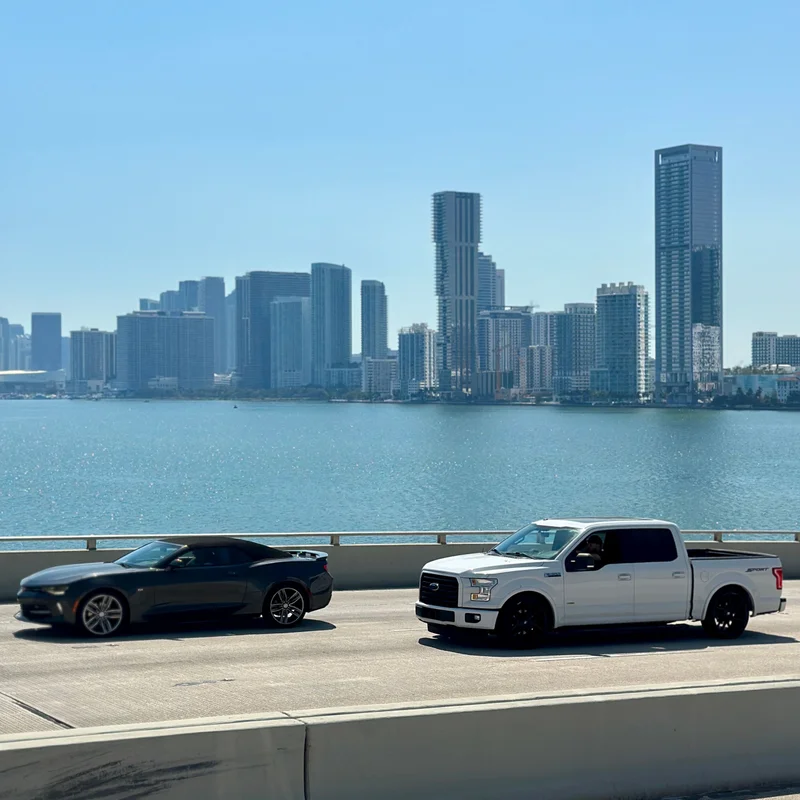
Geography shapes the work more than any rule. Biscayne Bay separates the mainland from Miami Beach and Key Biscayne, so a large share of trips crosses a causeway. The MacArthur and the Julia Tuttle carry no toll, but the Venetian and the Rickenbacker have charged $3.25 a trip with SunPass and $6.50 by toll-by-plate since October 1, 2025, and the expressways take no cash at all. Then come the two gateways. Miami International handled 55.3 million passengers in 2025 and nearly 3.5 million tons of freight, which the county reports as the most of any US airport, so there are airport runs at every hour and a warehouse belt around Doral and Medley that keeps parcel blocks moving. PortMiami counted 8,564,225 cruise passengers in the year to September 2025, and a morning when several ships turn around sends a wave of luggage-heavy rides to and from the port.
The calendar matters as much as the map. Winter is the high season, when tourists and snowbirds fill the Beach and Brickell and big weeks such as Art Basel in December jam the causeways. Summer runs the other way: the National Weather Service counts May 15 to October 15 as the South Florida wet season, with storms most afternoons, and hurricane season lasts from June 1 to November 30. A storm watch can take days off the map, and nothing pays for them. The heat is yours to manage too. After Miami-Dade weighed water and shade breaks for outdoor workers in 2023, the state barred cities and counties from setting heat rules as of July 1, 2024. And Spanish is everyday Miami: most people in the city speak it at home, so a few words help at restaurant counters and with riders, though you can work entirely in English.

From signup to your first earnings, the whole flow takes between 24 hours and a few days, depending on the vehicle and checks involved.
Just your phone and email. Then a few quick details: name, ZIP code, vehicle and eligibility. No fees, no contract.
We line you up with the Miami companies that fit your vehicle, your area and the hours you want. You see only the ones that want you.
Complete the checks each company runs: work authorization, driver's license, a background check and your bank details. How long that takes depends on the company and the city.
Here is what is different about driving in Miami, and what to have in place before you start.
Rideshare is governed by state law alone, so no city or county can add one.
Since September 30, 2026, for employees as federal law defines them.
Starting work in Florida makes you a resident, and the clock starts then.
Venetian and Rickenbacker: $3.25 against $6.50, since October 1, 2025.
A storm can take days of work off the map, and nothing pays for them.
Checked at signup. Payouts need a Social Security number and US bank account.
We only connect you to companies that actually fit your vehicle, your area and your eligibility. No wasted applications. No companies you can't take work for.
Sign up to get matchedDemand looks different across Miami. Here is where the work concentrates and when it peaks.
Brickell, Downtown, Edgewater, Little Havana, the Arts and Entertainment District
South Beach, Mid-Beach, North Beach, Surfside
Wynwood, Midtown, the Design District, Little Haiti, the Upper East Side
MIA, Doral, Medley, Hialeah, Westchester, Kendall
We match drivers across Miami-Dade County, from Brickell and Downtown out to Miami Beach and Key Biscayne, north through Wynwood, Little Haiti and North Miami to Aventura, and west and south through Hialeah, Doral, Coral Gables, Kendall and Homestead. Food demand is densest in Brickell, Wynwood and South Beach, rideshare runs heaviest between the Beach, MIA and PortMiami, and parcel blocks start from the warehouse belt around Doral and Medley. Trips regularly run up into Broward County and to the Fort Lauderdale airport, so if you live in South Broward you are within reach as well. Give us your ZIP code and we will show you what is hiring closest to you.
No, and Miami could not create one if it wanted to. Florida law says rideshare companies and drivers are governed exclusively by the state and bars cities and counties from imposing any rate, entry or operating requirement on them, and a separate statute keeps minimum wages a state matter. Miami Beach passed its own minimum wage anyway, and the Third District Court of Appeal struck it down in 2017. So unlike New York City, there is nothing underneath app work here: what you earn is whatever the companies pay, plus tips.
Only to drivers who are employed. The state rate rose to $15 an hour on September 30, 2026, the final step of the Amendment 2 increases voters approved in 2020, and it holds through December 31, 2027, before moving with inflation from January 1, 2028. Florida defines employee the way the federal Fair Labor Standards Act does, and its rideshare statute treats a driver as an independent contractor when the company does not set your hours, does not stop you working for rivals or in another job, and agrees in writing that you are a contractor. App work set up that way is 1099 work, and the minimum wage does not reach it.
It depends on the work you take, and no published Miami figure is worth repeating. Amazon publishes up to $18 to $25 an hour, tips included, for Flex blocks nationally, which is the only company-published hourly figure that applies here and is not a Miami rate. DoorDash pays per offer plus all of your tips, grocery apps pay per batch plus tips, and rideshare pays per trip. Treat every one of those as revenue: gas, tolls, insurance and the wear on your car come out of it before anything is yours.
Tolls on the expressways and the county causeways are cashless, so you pay by SunPass transponder or get a toll-by-plate bill, which costs more. On the two tolled county causeways, the Venetian to Miami Beach and the Rickenbacker to Key Biscayne, Miami-Dade County has charged $3.25 a trip by SunPass and $6.50 by plate since October 1, 2025, plus a $2.50 monthly invoice fee on plate bills. The MacArthur and Julia Tuttle causeways to the Beach are free. On Uber, tolls on a trip with a rider are added to the fare and repaid to you; the empty drive back over the bay is yours.
Both are central to driving in Miami rather than a sideline. Miami International handled 55.3 million passengers in 2025, and for Uber you wait in the lot at the northwest corner of McLaughlin Road and NW 20th Street, in a virtual queue ordered by arrival, with the Uber decal on your windshield; going offline, leaving the lot or turning down several requests costs you your place. PortMiami counted 8,564,225 cruise passengers in the year to September 2025, and ship days bring a wave of disembarking passengers in the morning and departing ones in the afternoon.
More than anything else on the calendar. Hurricane season runs from June 1 to November 30, and the National Weather Service counts May 15 to October 15 as the South Florida wet season, with near-daily afternoon storms. A storm watch can stop work for days, and as a contractor nothing pays you through it, so plan savings for the gap. Heat is your call as well: Florida barred cities and counties from setting heat protections as of July 1, 2024, and as a contractor you set your own breaks anyway, so carry water and keep the AC working.
No, you can do the whole job in English. But Spanish is the language most people in the city of Miami speak at home, and you will hear it at restaurant counters in Little Havana, Hialeah and Doral and from a good share of riders. A few words make pickups faster and conversations with riders easier.
Yes, and Florida law all but builds it in: one of the conditions for a rideshare driver to count as an independent contractor is that the company does not stop you using rival apps. Plenty of Miami drivers run rideshare between the airport and the Beach and switch to food or parcel blocks when the airport goes quiet. Service Club is one signup across all of them, so you only do the paperwork once.
Completely. Service Club charges drivers nothing, here or anywhere else. The companies we connect you with pay us, so every dollar you earn from them stays yours.