


Midtown and Lower Manhattan
Midtown, Hell's Kitchen, Flatiron, SoHo, the Financial District, Chelsea

Drive passengers or deliver food, groceries and parcels, across New York City and the surrounding areas. One signup, and you set your own hours.

TRUSTED BY THE WORLD'S LEADING LOGISTICS COMPANIES










New York is one of the busiest driving markets in the country, for passengers and for deliveries. Whatever you drive, there is a role that fits.
Drive passengers for Uber or Lyft as an independent contractor. You pick the hours, the area and how much you work.
Deliver restaurant orders for DoorDash, Uber Eats and Grubhub. Short jobs and quick turnaround, with tips on top.
Shop and deliver grocery and retail orders for Instacart, Shipt and Spark Driver, paid per batch plus tips.
Block-based shifts delivering parcels. Book scheduled blocks and see what the block pays before you accept it.

"I had been driving for years but never knew how to get onto the bigger platforms. Service Club matched me with three companies that suit my schedule."
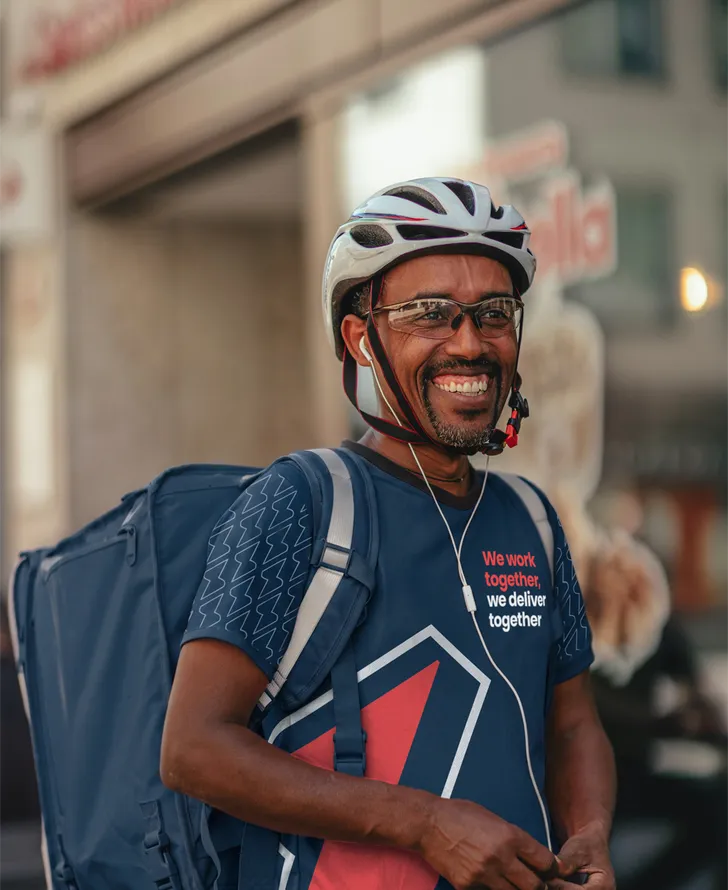
"The paperwork alone used to put me off. Service Club handled everything, background checks, insurance docs. Now I earn more and stress less."

"I was juggling three different delivery apps before Service Club. They set me up with a single contract and I was driving for two companies within 48 hours."
As an independent contractor you are paid per job, at the rates each company publishes, plus tips. Here is how each kind of work pays in New York.
Figures are revenue before gas, vehicle costs, insurance and self-employment tax, not wages. Company-published ranges are national unless a row says otherwise, and any local pay rule is explained on this page. Actual earnings depend on hours worked, area covered and how many companies you sign up with through Service Club.
Service Club ® connects New York drivers to top companies faster, for passenger work and for delivery, with less paperwork and more support.
Apply once and get matched to multiple New York companies, for passenger driving and for delivery. No repeating the same forms across different apps.
Drive as an independent contractor: you decide when to log on, where to work and how much to take on.
Discounts on gas, food, gear, phone plans and entertainment. Built specifically for people who drive for a living.
Service Club is free for you. We earn from the companies we connect you to, never from your earnings.
No exclusivity on contractor work. Run rideshare and delivery in parallel, or pick up scheduled parcel blocks on quiet days. Your call.
Real humans you can reach when something goes wrong on the road, not just an app chatbot.
New York City was the first city in the country to set a legal minimum for app delivery. Since the first pay period on or after April 1, 2026 the apps must pay at least $22.13 an hour before tips, up from $21.44, and since January 26, 2026 the rule covers grocery apps as well as restaurant ones, so Instacart and Shipt sit under the same floor as Uber Eats, DoorDash and Grubhub. Few other places come close: Atlanta and Newark have no floor at all, California only protects your engaged time, and Seattle sets its floor per engaged minute and mile rather than by the hour.
Read the number carefully, because it is not quite what it looks like. The apps may apply it either to your active time, from accepting an order to dropping it off, or to every hour you are logged in, and they choose which. On the active-time method a slow hour with two jobs in it pays for those two jobs, not for the hour. The same package of rules added protections that matter more than the headline: you must be paid within seven days of the pay period ending, with an itemized statement, and every checkout has to offer a tipping option with a suggested minimum of 10 percent.
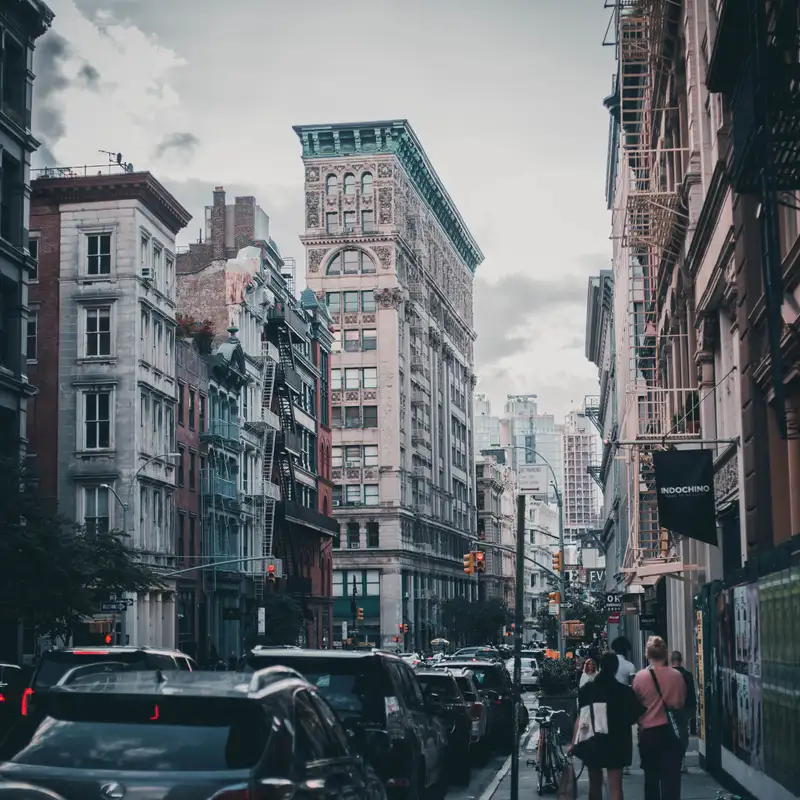
Most delivery here is done on an e-bike, and the city has written strict rules around it. Since October 2025 every e-bike is capped at 15 mph on city streets whatever its class, and since January 26, 2026 an e-bike or battery without a UL mark from an accredited laboratory cannot legally be used for app delivery at all. The Department of Transportation also launched mandatory safety training on April 8, 2026. None of this is optional and none of it is enforced lightly, so check the mark on your battery before you buy anything used.
Passenger work is the part people get wrong. Driving for Uber or Lyft in New York needs a Taxi and Limousine Commission (TLC) license for you and TLC plates on the car, and the city has capped new for-hire plates since 2018. It reviewed the cap again in February 2026 and kept it, leaving wheelchair-accessible vehicles as the only route to new plates. In practice that means renting or driving an already-plated car rather than using your own. If you deliver by car into Manhattan below 60th Street, the congestion toll is $9 at peak and $2.25 overnight, and it comes out of your pocket.
From signup to your first earnings, the whole flow takes between 24 hours and a few days, depending on the vehicle and checks involved.
Just your phone and email. Then a few quick details: name, ZIP code, vehicle and eligibility. No fees, no contract.
We line you up with the New York companies that fit your vehicle, your area and the hours you want. You see only the ones that want you.
Complete the checks each company runs: work authorization, driver's license, a background check and your bank details. How long that takes depends on the company and the city.
Here is what is different about driving in New York, and what to have in place before you start.
$22.13 an hour before tips since April 1, 2026, on food and grocery apps.
On the active-time method a quiet hour pays for its jobs, not for the hour.
Required since January 26, 2026. Check used bikes and batteries closely.
Citywide since October 2025, whatever class the bike is.
Kept in February 2026. Only wheelchair-accessible cars get new plates.
Every company checks it. To get paid you need an SSN and a US bank account.
We only connect you to companies that actually fit your vehicle, your area and your eligibility. No wasted applications. No companies you can't take work for.
Sign up to get matchedDemand looks different across New York. Here is where the work concentrates and when it peaks.
Midtown, Hell's Kitchen, Flatiron, SoHo, the Financial District, Chelsea
Williamsburg, Bushwick, Park Slope, Fort Greene, Downtown Brooklyn, DUMBO
Astoria, Long Island City, Sunnyside, Jackson Heights, Flushing
Upper East Side, Upper West Side, Harlem, Washington Heights, the South Bronx
We match drivers and delivery workers across New York City, from Midtown and Lower Manhattan out through Brooklyn and Queens to the Bronx and Staten Island. Food demand is densest below 96th Street and along the Williamsburg and Bushwick corridor, grocery batches are strongest in Queens and outer Brooklyn, and parcel block work sits mostly outside the congestion zone. Tell us your ZIP code and we will line you up with what is hiring near you.
Yes. New York City was the first US city to set one for app delivery. The Department of Consumer and Worker Protection sets it, and since the first pay period on or after April 1, 2026 it is $22.13 an hour before tips, up from $21.44. Since January 26, 2026 it covers grocery apps as well as restaurant ones, so Instacart and Shipt count alongside Uber Eats, DoorDash and Grubhub.
Not necessarily, and this is the part worth understanding before you plan a shift. The apps are allowed to apply the rate either to your active time, meaning from accepting a job to completing it, or to all the time you are connected, and each company picks its method. On the active-time method an hour with two short jobs in it pays for those two jobs rather than for the whole hour. Tips are on top either way, and the law requires a tipping option at checkout with a suggested minimum of 10 percent.
No, and for most of the city a car is the wrong tool. Manhattan and inner Brooklyn are dense enough that an e-bike beats a car on almost every measure once parking and the congestion toll are priced in. A car earns its keep on grocery batches and scheduled parcel blocks in the outer boroughs, where distances are longer and parking exists.
Three of them matter. E-bikes are capped at 15 mph on city streets, citywide since October 2025, whatever class the bike is. Since January 26, 2026 an e-bike or battery without a UL mark from an accredited laboratory cannot legally be used for app-based delivery, which is the rule that catches people who bought used. And the Department of Transportation launched mandatory safety training on April 8, 2026. Check the mark on the battery before you buy anything.
Almost certainly not, and this surprises drivers who have done it in other cities. Passenger work in New York requires a Taxi and Limousine Commission (TLC) license for you and TLC plates on the car, and the city capped new for-hire plates in 2018. It reviewed the cap again in February 2026 and left it in place, with wheelchair-accessible vehicles the only exception. In practice drivers rent an already-plated car or drive for a fleet that owns one, rather than using their own car.
It affects anyone driving into Manhattan south of and including 60th Street. Cars pay $9 at peak, which runs 5am to 9pm on weekdays and 9am to 9pm on weekends, and $2.25 overnight. It comes straight out of your pocket, which is another reason Manhattan delivery is done on two wheels. Bikes and e-bikes pay nothing, and TLC-plated rideshare cars do not pay the daily toll: their passengers pay a per-trip charge instead.
Within seven calendar days of the pay period ending, with a detailed itemized statement, which the city has required of the delivery apps since January 26, 2026. That is a real change: late and unexplained payments were one of the most common complaints before the rule, and the statement is what lets you check the hourly minimum was actually applied.
Yes, and in this market most experienced delivery workers do. There is no exclusivity on contractor work, so you can run Uber Eats, DoorDash and Grubhub in parallel and pick up grocery batches on quieter days. Service Club is one signup across all of them, so the paperwork happens once.
No. Service Club is free for drivers and delivery workers. We earn from the companies we connect you to, not from you. You keep 100% of what you earn from the companies themselves.