


Downtown, South Lake Union and SODO
Downtown, Belltown, South Lake Union, Pioneer Square, the waterfront, SODO

Drive passengers or deliver food, groceries and parcels, across Seattle, King County and the surrounding areas. One signup, and you set your own hours.
TRUSTED BY THE WORLD'S LEADING LOGISTICS COMPANIES










Seattle has a legal pay floor for rideshare and a separate one for delivery, so the roles differ as much in which rule covers the job as in what you drive.
Drive passengers for Uber or Lyft as an independent contractor. You pick the hours, the area and how much you work.
Deliver restaurant orders for DoorDash, Uber Eats and Grubhub. Short jobs and quick turnaround, with tips on top.
Shop and deliver grocery and retail orders for Instacart, Shipt and Spark Driver, paid per batch plus tips.
Block-based shifts delivering parcels. Book scheduled blocks and see what the block pays before you accept it.

"I had been driving for years but never knew how to get onto the bigger platforms. Service Club matched me with three companies that suit my schedule."

"The paperwork alone used to put me off. Service Club handled everything, background checks, insurance docs. Now I earn more and stress less."

"I was juggling three different delivery apps before Service Club. They set me up with a single contract and I was driving for two companies within 48 hours."
As an independent contractor you are paid per job, at the rates each company publishes, plus tips. Here is how each kind of work pays in Seattle.
Figures are revenue before gas, vehicle costs, insurance and self-employment tax, not wages. Company-published ranges are national unless a row says otherwise, and any local pay rule is explained on this page. Actual earnings depend on hours worked, area covered and how many companies you sign up with through Service Club.
Service Club ® connects Seattle drivers to top companies faster, for passenger work and for delivery, with less paperwork and more support.
Apply once and get matched to multiple Seattle companies, for passenger driving and for delivery. No repeating the same forms across different apps.
Drive as an independent contractor: you decide when to log on, where to work and how much to take on.
Discounts on gas, food, gear, phone plans and entertainment. Built specifically for people who drive for a living.
Service Club is free for you. We earn from the companies we connect you to, never from your earnings.
No exclusivity on contractor work. Run rideshare and delivery in parallel, or pick up scheduled parcel blocks on quiet days. Your call.
Real humans you can reach when something goes wrong on the road, not just an app chatbot.
Seattle is one of the very few places in the United States where app work has a legal minimum, and it has two. Rideshare comes under Washington State law, which pays more inside the city: since January 1, 2026 a trip in Seattle must earn at least 70 cents for every minute and $1.63 for every mile with a passenger on board, or $6.12 for the trip, whichever is more. Delivery comes under the city's own App-Based Worker Minimum Payment Ordinance (the PayUp law), in force since January 2024, which for 2026 sets 47 cents per engaged minute plus 80 cents per engaged mile, or $5.34 an offer, again whichever is more. Tips go on top of both.
Read both floors for what they leave out. Neither one pays for the time you spend waiting for the next job. The rideshare rate counts only time and distance with a passenger in the car, so the drive to a pickup is not part of it, while the delivery rate runs from the moment you accept an offer until it is done. And both are Seattle rules. Bellevue, Redmond, Renton, Kent and SeaTac, where the airport is, are separate cities, where rideshare drops to the statewide 40 cents a minute and $1.38 a mile, and delivery has no floor at all unless you accepted the job inside Seattle or drive part of it there.
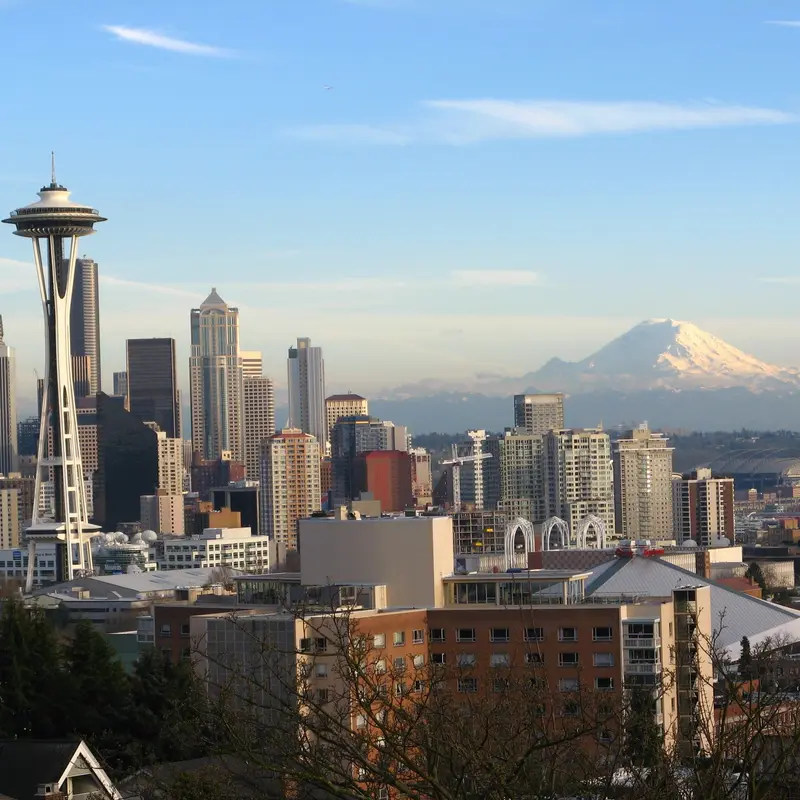
Seattle sits between Puget Sound and Lake Washington, and the water shapes every shift. Two highways cross the lake to the Eastside on floating bridges: I-90 carries no toll, while the 520 bridge charges $4.90 with a Good To Go! pass at the weekday peaks of 7 to 10am and 3 to 7pm, the rate since August 2024, and $6.90 by mail. The 99 tunnel under downtown is tolled too. On a delivery, or an empty run back across the lake, the toll comes out of your pocket, which is why plenty of drivers pick one side of the water and stay there.
The hills and the weather do the rest. Queen Anne, Capitol Hill and First Hill climb steeply out of downtown, hard going on a bike without a motor, and the wet season that runs from fall into spring slows every route. Demand gathers around clear poles: the offices of downtown and South Lake Union, the evening trade on Capitol Hill and in Ballard, game nights at Lumen Field and T-Mobile Park, the tech campuses in Bellevue and Redmond, and Sea-Tac Airport, which sits south of the city limits. Farther south, Kent has a large and growing warehouse district, a steady source of scheduled parcel work.

From signup to your first earnings, the whole flow takes between 24 hours and a few days, depending on the vehicle and checks involved.
Just your phone and email. Then a few quick details: name, ZIP code, vehicle and eligibility. No fees, no contract.
We line you up with the Seattle companies that fit your vehicle, your area and the hours you want. You see only the ones that want you.
Complete the checks each company runs: work authorization, driver's license, a background check and your bank details. How long that takes depends on the company and the city.
Here is what is different about driving in Seattle, and what to have in place before you start.
Plus a vehicle decal, collected in person. The company files the paperwork.
70 cents a minute and $1.63 a mile with a passenger, or $6.12 a trip.
47 cents a minute and 80 cents a mile while engaged, or $5.34 an offer.
Rideshare counts only passenger time. Delivery counts from accepting a job.
Deliveries done wholly there have no floor. Rideshare pays the state rate.
Checked by each company. Payouts need an SSN and a US bank account.
We only connect you to companies that actually fit your vehicle, your area and your eligibility. No wasted applications. No companies you can't take work for.
Sign up to get matchedDemand looks different across Seattle. Here is where the work concentrates and when it peaks.
Downtown, Belltown, South Lake Union, Pioneer Square, the waterfront, SODO
Capitol Hill, First Hill, the Central District, the U District, Wallingford
Ballard, Fremont, Queen Anne, Magnolia, Greenwood, Northgate
Bellevue, Redmond, Kirkland, Renton, Tukwila, Kent, SeaTac
We match drivers across Seattle and out into King County, from downtown, Capitol Hill and Ballard across Lake Washington to Bellevue, Kirkland and Redmond, and south through Tukwila and Renton to Sea-Tac Airport and Kent. The Seattle pay rules cover the city itself and stop at its limits, so the same shift can cross from one set of rules to another. Food demand is densest in the core and on Capitol Hill, grocery work spreads across the residential north and the Eastside, and parcel blocks come out of the Kent Valley. Tell us your ZIP code and we will line you up with what is hiring near you.
Yes. Washington State sets one for Uber, Lyft and the other rideshare companies, and it pays more inside Seattle than anywhere else in the state. Starting January 1, 2026, a trip in Seattle must earn at least 70 cents per minute and $1.63 per mile with a passenger on board, or $6.12 for the trip, whichever is more. The rest of Washington gets 40 cents, $1.38 and $3.55. The rates rise every January in line with the state minimum wage, tips are paid on top, and the same law gives rideshare drivers paid sick time, one hour for every 40 hours with passengers, plus workers' compensation coverage.
No. The city ordinance pays 47 cents per engaged minute and 80 cents per engaged mile for 2026, or $5.34 per offer if that is more, and engaged time starts when you accept an offer and ends when you complete it or it is canceled. Time logged in between offers is not covered. Tips are on top and cannot count toward the minimum. The city's first report on the ordinance, published in April 2026, found that base pay became the main part of what delivery workers earn while tips and bonuses shrank, so plan on the floor rather than on generous tipping.
Only partly, and this is where drivers get tripped up. Bellevue, Redmond, Renton, Kent, Tukwila and SeaTac are separate cities. For rideshare, the minutes and miles you drive inside Seattle are paid at the Seattle rate and the rest at the statewide rate, and any trip that starts or ends in Seattle earns at least $6.12. For delivery, the city floor covers a whole offer when you accept it inside Seattle, and only the Seattle part of a job that started outside. An order you take and finish in Bellevue has no floor at all.
A county permit, on top of the app signup. Giving rides in Seattle, anywhere in King County or from Sea-Tac Airport needs a King County for-hire driver permit and a decal on the vehicle. The rideshare company sends the application for you, the process includes a vehicle inspection, training and an exam, and you collect the permit and decal in person at the county licensing office. Decals issued since April 2026 are orange. If you are moving to Washington, you also have 30 days to switch to a Washington driver's license.
Passengers meet rideshare drivers on the third floor of the airport parking garage, in marked stalls, and you need an active trip in the app to pull in: waiting there for a new request is not allowed. Drivers can wait for requests in the lot on South 160th Street. The airport is in the city of SeaTac, not Seattle, so a pickup there is paid at the statewide rate until you cross into Seattle, and a trip that ends in Seattle still earns at least $6.12.
Only employees. Seattle's minimum wage is $21.30 an hour starting January 1, 2026, and the Washington rate is $17.13, but app driving is independent contractor work, so neither applies to it. What does apply are the two app-work floors: the state rideshare minimum and the city delivery minimum. Everything you earn on top of them is revenue rather than wages, and gas, insurance, vehicle costs and self-employment tax come out of it.
Not without following set steps, since January 1, 2025. Under the city's App-Based Worker Deactivation Rights Ordinance, delivery and other app companies outside rideshare must publish a deactivation policy, give 14 days' notice in most cases with the reasons and the records behind them, and let you challenge the decision, with 90 days to do so. Immediate deactivation is still allowed for egregious misconduct. Until June 2027 the city can only check that the process was followed, not whether the reason was fair. Rideshare drivers are covered by state law instead, which set up a Driver Resource Center that can represent them in a deactivation appeal.
Yes, and the floors make it easier to plan. Each rule applies job by job, so inside Seattle you keep the minimum on every trip and every offer, whichever app sent it. One way to split a Seattle day is rideshare through the commute peaks and the airport, then food delivery on Capitol Hill or in Ballard in the evening. Service Club is one signup for all of them, so the paperwork happens once.
No, nothing at any point. Service Club is free for drivers, and the companies we connect you to are the ones who pay us. Every dollar the companies pay you, tips included, stays yours.