
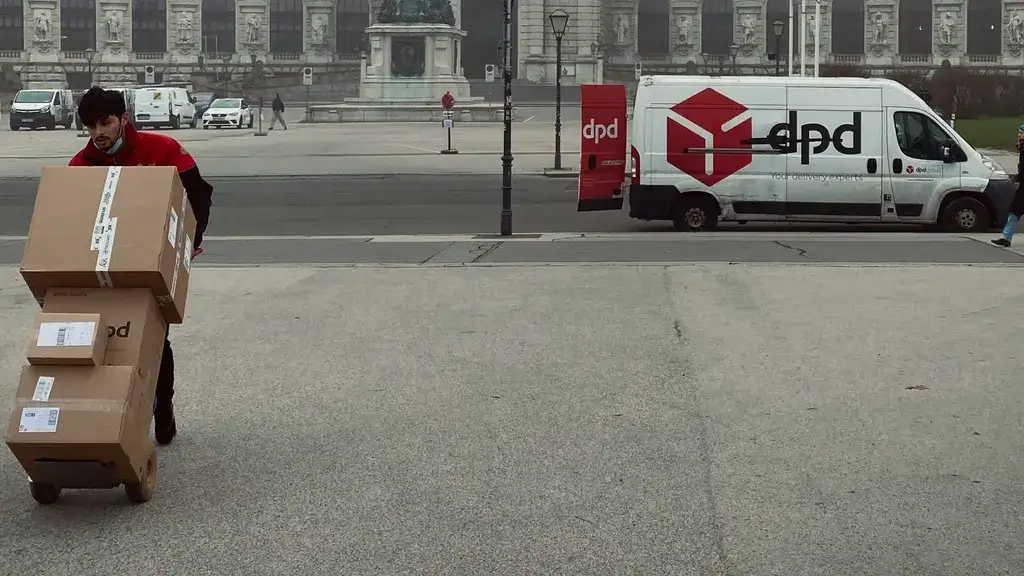
Owner driver adverts for DPD routes quote £50,000 to £60,000 a year. The figure circulates on job boards and driver forums, and it draws a lot of searches from people trying to work out whether it is real.
It is real as a revenue figure. A full route in a reasonable area does turn over that much. What is left after van finance, fuel, insurance and tax is a different number, and nobody advertises that one.
DPD also runs two other driver models that pay nothing like the franchise, and most people searching for a DPD salary are actually looking at one of those. This guide covers all three, what each pays in practice, and where the published figures stop being trustworthy.
Three types of DPD driver, three different pay models
Before any figure means anything, you need to know which model it describes. The three have almost nothing in common on earnings, commitment or risk.
Owner Driver Franchise. Self-employed. You take on a route, own or finance a van, cover every running cost, and are paid per parcel handled. This is the model behind the £50,000 to £60,000 headline.
DPD Connect. Self-employed and much lighter-touch. You use your own car or small van, collect parcels from a local pickup point, and deliver in your area. No route purchase and no capital outlay.
Employed driver. On DPD's payroll or an agency's, paid hourly or by the day, with holiday pay, sick pay and employer pension contributions. This is the only one of the three where the National Living Wage sits underneath you.
If you are weighing DPD against the wider market before picking a lane, our guide to becoming a delivery driver in the UK covers the documents, HMRC registration and insurance decisions that come before any of this.
DPD owner driver pay: what the £50,000 to £60,000 figure means
Owner driver adverts for DPD routes quote £50,000 to £60,000 a year. Worth being precise about what that figure is and is not.
It is route revenue, not salary. It is the total the route bills before a single cost comes off. DPD's own owner driver franchise portal does not publish an earnings figure at all, so treat the £50,000 to £60,000 range as what recruitment adverts claim rather than as a number DPD stands behind.
Payment is per parcel, on a matrix scale. The first parcel at an address pays the most and additional parcels at the same stop pay less, which is why route density matters more than parcel count. Owner driver community reports put the per-parcel rate at roughly £1.00 to £1.80, varying by route, parcel band and any performance agreement. That range is community-sourced rather than published by DPD, so treat it as indicative.
DPD's franchise portal states owner drivers are paid every four weeks, not weekly. If you are moving from weekly gig work, that changes your cashflow planning considerably.
A dense urban route doing 120 parcels a day inside a few square miles and a rural route doing 120 parcels across 40 miles bill similar amounts and cost wildly different sums to run. The route is the variable that decides your income, not the headline.
What comes out of a DPD owner driver route
You are running a small business, and the business pays its own costs. Here is what a single full-time route typically absorbs in a year.
| Cost | Estimated annual figure |
|---|---|
| Van finance or lease | £5,000 to £8,000 |
| Fuel | £12,000 to £16,000 |
| Commercial van insurance | £1,200 to £4,000 |
| Servicing, tyres and MOT | £1,500 to £3,000 |
| Fuel card interest and sundries | £500 to £1,000 |
| Total operating costs | £20,200 to £32,000 |
The insurance band comes from our own delivery driver insurance cost guide, which puts annual van cover at £1,200 to £4,000 depending on vehicle, area and driving history.
On a £55,000 route, those operating costs leave roughly £23,000 to £34,800 of pre-tax profit. Income tax and Class 4 National Insurance then come off that profit, not off the £55,000, which is the step most breakdowns get wrong.
A word on the net figures you will see quoted. Published estimates of DPD owner driver take-home vary enormously: £20,000 to £35,000, £28,000 to £40,000, £31,000 to £42,000, all presented as typical. Every one traces to a forum thread, a salary aggregator or another blog rather than to DPD or to audited accounts, and they contradict each other by more than £20,000. We are not going to pick one and call it the answer. Run the arithmetic above against the actual route you are offered, and treat any single quoted net figure with suspicion.
Before signing anything, ask to see the last three months of parcel volume data for that specific route. Real delivery counts tell you more than any earnings claim, and a route being sold cheaply usually has a reason.
DPD Connect: around £18 an hour, explained
DPD Connect is the low-commitment self-employed option. You use your own car or small van, collect from a designated local pickup point, deliver in your area, and are paid weekly into your bank account. There is no franchise fee and no route to buy.
DPD franchise job ads put Connect at around £18 an hour on average. That is an average, not a guarantee: it is reachable on a dense round with good volumes, and a sparse round comes in below it. Like the franchise, Connect pays per parcel, so your effective hourly rate moves with how tightly your drops cluster.
Because you are a contractor, two costs are yours:
- Fuel, in full, claimable against your tax bill as a business expense.
- Hire and reward insurance. Standard personal car cover does not extend to commercial delivery work and will not pay out on a claim made while you are working. Budget £800 to £1,500 a year for a car on parcel work.
Connect suits drivers who want steadier work than food delivery without the capital commitment of a franchise. Our comparison of the best delivery driver jobs in the UK puts Connect's hourly figure against Amazon Flex and Evri in more detail.
DPD employed driver pay
Employed DPD drivers get an hourly or daily rate plus statutory benefits, and the National Living Wage applies. Since April 2026 that floor is £12.71 an hour for workers aged 21 and over.
Breakroom, which collects verified pay submissions from workers, reports DPD delivery driver pay topping out at £15.69 an hour, and current DPD driver listings on the platform advertise up to £16.05. The bottom of Breakroom's submitted range predates the current statutory floor, so the realistic employed band today runs from £12.71 to £15.69 an hour, with the better-paying depots and shift patterns at the top.
For the licensed roles, Breakroom puts DPD HGV Class 1 drivers at £15.00 to £18.49 an hour.
Full time at £14 an hour grosses around £29,000 a year, with holiday pay and employer pension on top. That is less headline than the franchise figure and it is take-home rather than turnover, which makes the two harder to compare than they look. Set against the wider market, DPD employed van work sits below the £13 to £16 that the supermarkets pay their own delivery drivers, a comparison worth making on the driver hub before you commit.
Can you really earn £50,000 as a DPD driver?
Two honest answers, depending on what you mean by earn.
Yes, a route generates that revenue. A full DPD route in a reasonable area, delivering 100 to 150 parcels a day across six days, bills in the £50,000 to £60,000 range. The adverts are not inventing it.
No, that is not what you keep. Operating costs take £20,000 to £32,000 of it before tax, and tax comes off what is left. Whatever your final number, it is not a £50,000 salary in the sense someone comparing it to an employed job would understand.
The comparison that actually matters is not franchise revenue against an employed salary. It is franchise profit after costs and tax against an employed salary plus holiday pay, pension and the knowledge that a quiet week still pays.
DPD pay compared with Amazon Flex, Evri and Just Eat
| DPD Owner Driver | DPD Connect | Amazon Flex | Evri | Just Eat | |
|---|---|---|---|---|---|
| Pay structure | Per parcel, franchise | Per parcel, own vehicle | Per block of 2 to 4 hours | Per parcel | Per drop plus fees |
| Typical figure | £50,000 to £60,000 route revenue | Around £18 an hour on average, per DPD franchise job ads | £14 to £18 an hour | 50p to £1.50 a parcel, about £13.72 an hour effective (indicative, aggregator sourced) | £8 to £13 an hour indicative |
| Vehicle | Van, owned or financed | Car or small van | Car | Car or van | Bike, moped or car |
| Insurance | Yours to arrange | Yours to arrange | Yours to arrange | Yours, with daily top-up available | Yours to arrange |
| Pay frequency | Every four weeks | Weekly | Weekly | Monthly | Weekly |
| Capital needed | Yes, van and route | No | No | No | No |
Evri's numbers come from our delivery driver pay guide, which covers the per-parcel structure and the monthly pay cycle properly.
Amazon Flex UK also leaves hire and reward cover with the driver, so on costs the two are level; where they differ is that Flex ties you to fixed scheduling blocks you have to compete for. For anyone prepared to make the franchise commitment and manage a business, DPD owner driving has the highest revenue ceiling of the parcel networks.
Which DPD model fits you
Owner Driver if you can finance a van, want to run a business rather than hold a job, and will commit to a route long term. Highest ceiling, all of the risk, and four-weekly pay.
Connect if you have a suitable car or light van, want self-employed flexibility without buying in, and prefer weekly money. You still need hire and reward cover.
Employed if you want fixed hours, holiday pay and a pension, and would rather have a predictable rate than a route-volume income.
How to apply for DPD driver work
Where you apply depends on which of the three models you have picked.
Employed roles are posted on DPD's own careers page, and the same vacancies turn up on Indeed, Reed and TotalJobs. Logistics recruitment agencies also fill DPD depot shifts, so if the careers page shows nothing near you, an agency that specialises in driving work is the other route in. Connect and the owner driver franchise are applied for through DPD directly rather than through a job board, and the questions are about your vehicle and your area as much as about you.
Have the documents ready before you start, because that is where applications stall. Every route needs a full UK driving licence and proof of your right to work in the UK. For Connect and the franchise you also need proof of hire and reward insurance on the vehicle you will use, since standard personal cover does not count, and you will go through a background check before your first parcel.
The online application is a form, a CV upload and a few questions about your availability and where you live. If you are shortlisted, expect an interview or an onboarding session, and expect it to ask about reliability, how you handle pressure and how you manage your time. Delivery experience helps but is not required for the employed and Connect roles; DPD trains you on the app and the parcel handling. What it cannot train is turning up every day, which is what those three questions are really probing.
FAQs about DPD driver salary
Can you really earn £50,000 as a DPD driver?
As route revenue, yes. As take-home pay, no. A DPD owner driver route bills £50,000 to £60,000 a year in advertised cases, but £20,000 to £32,000 of that goes on van finance, fuel, insurance and maintenance, and income tax plus Class 4 National Insurance come off the profit that remains. It can be a solid self-employed income. It is not a £50,000 salary.
How much do DPD drivers earn per parcel?
Owner drivers are paid on a matrix scale, reported by driver communities at roughly £1.00 to £1.80 per parcel. The first parcel at an address pays the highest rate and additional parcels at the same stop pay less, which is why dense routes earn more per hour than sparse ones. DPD does not publish its rate card, so treat these figures as indicative.
Do DPD pay for fuel?
No. Owner drivers and Connect drivers cover their own fuel as self-employed contractors, and can claim it against their tax bill as a business expense. Employed drivers may get a fuel allowance depending on the contract and depot, but it is not standard.
How often does DPD pay its drivers?
It depends on the model. DPD Connect pays weekly into your bank account. Owner driver franchisees are paid every four weeks according to DPD's franchise portal. Employed drivers follow their contract, typically weekly or monthly.
What do you need to become a DPD Connect driver?
A full UK driving licence, your own car or small van, hire and reward insurance for commercial delivery work, a smartphone, and the right to work in the UK. There is no franchise fee and no capital requirement, which is the main difference from the owner driver route.
Is DPD Connect or Evri better paid?
They are the closer comparison of the two. Both pay per parcel at broadly similar rates, so the difference comes down to route density and pay timing rather than the headline rate. DPD Connect pays weekly and Evri pays monthly, which matters more than most drivers expect in the first two months.
Run the numbers on the route, not the advert
Ask for three months of parcel volumes on the route you are actually offered, cost it with the table above, and set the result against an employed rate that comes with holiday pay. To see DPD next to Evri, Amazon Flex and the supermarkets on the same page, the best delivery driver jobs comparison does that. If you want to see who is hiring near you, the form below takes a minute.