
Amazon Flex and DoorDash are the two names most people land on when they first look at delivery work in the US, and they are not the same job. Flex is parcel and grocery delivery for Amazon in scheduled blocks, in your own mid-size car, with the pay for the block shown before you take it. DoorDash is on-demand food delivery, one offer at a time, in almost any vehicle, with the pay decided offer by offer and topped up by tips.
This guide compares Amazon Flex vs DoorDash on the things that decide what you actually keep: where each operates, how the pay is built, how the hours work, what car and age they ask for, what gas, mileage and insurance cost you, and how the tax bill lands. It ends with a straight answer on which to pick.
Where each one operates
DoorDash runs in all 50 states and in most towns of any size. If you can order a burrito to your door where you live, you can probably deliver it. That reach is DoorDash's biggest structural advantage: you sign up, pass the background check and start.
Amazon Flex works out of Amazon delivery stations, so it exists where those stations are, in and around larger metro areas. Amazon's own FAQ tells you to check availability for your area in the app, and in some cities the answer is a waitlist. If Flex is not in your ZIP code, this comparison is over before it starts, and the question becomes DoorDash versus the other on-demand apps, which our guide to the best delivery apps to work for in the US covers.
How the pay is built
The two platforms pay in different shapes, and the shape matters more than the headline number.
Amazon Flex: a fixed price per block
Flex pays per block. An offer in the app shows the date, the type of delivery, the start time, the estimated duration and the expected earnings, and you accept or skip it. Amazon publishes that "most drivers earn up to $18 to $25 an hour delivering with Amazon Flex", with its own footnote that actual earnings vary by location, tips, delivery time and other factors. That range includes tips, and 100% of tips go to the driver.
Two things follow. You know what a block pays before you commit to it, which no on-demand app can offer. And the hourly figure is only as good as the estimated duration: finish a three-hour block in two and a half and your effective rate goes up, get stuck in traffic and it goes down, because the block pay does not.
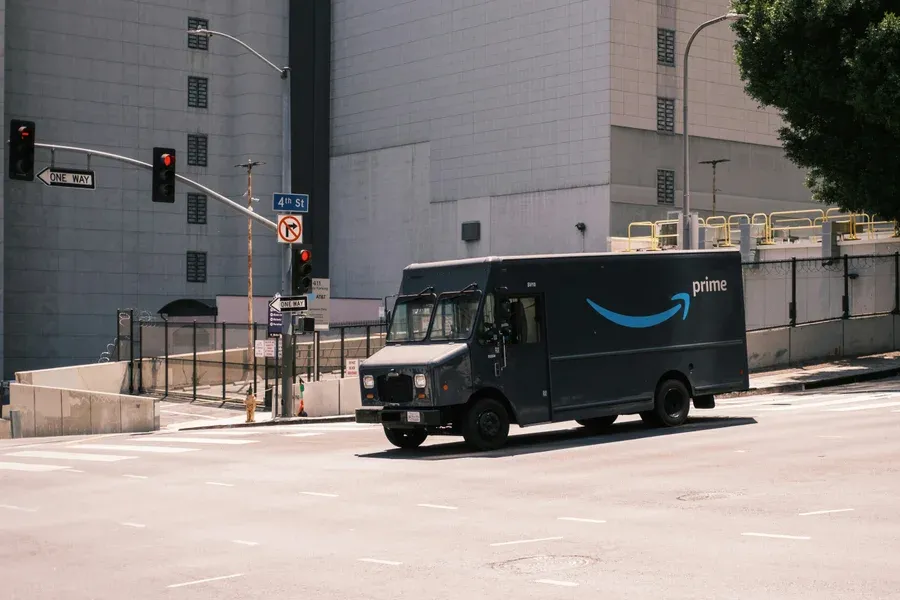
The branded vans you see on the street are a different job. Those are Delivery Service Partner routes, employed work with a company vehicle. Flex is you, your own car and a scheduled block.
DoorDash: base pay per offer, plus tips
DoorDash's Dasher pay page publishes a base pay of $2 to $10 or more per offer, set by estimated time, distance and how desirable the offer is, plus 100% of the customer's tip. Peak Pay adds a fixed bonus per delivery or per hour when demand is high. In some markets DoorDash also offers Earn by Time, a guaranteed rate for active time that varies by market and is not published nationally.
That means a DoorDash hour has no fixed value. Ten short deliveries with good tips on a Friday night can clear what a Flex block pays. Three deliveries on a wet Tuesday afternoon can be under $20 for the hour before you have bought any gas. Tips are also the part you control least, and on DoorDash they are a much bigger share of the total than on Flex.
The caveat that applies to both numbers
Every figure above is revenue, not a wage. Gas, mileage, insurance, phone and self-employment tax all come out before you have earned anything, and both platforms treat you as an independent contractor, so the federal minimum wage of $7.25 does not apply to you at all. The only places with a floor are New York City, where app delivery workers have a published minimum of $22.13 per hour of active time, and California, where Prop 22 guarantees 120% of the applicable minimum wage for engaged time plus 37 cents an engaged mile. Everywhere else, a quiet shift pays what the offers paid, and nothing underwrites it.
Scheduling: blocks against on-demand

Flex is scheduled work. Amazon's FAQ puts Amazon.com blocks at typically three to six hours, Amazon Fresh blocks at two to four, and Amazon Now instant offers at around an hour and a half. You book a block, drive to the delivery station, load, deliver the route and drive home. The drive to and from the station is unpaid and, in a big metro, can add an hour to a block. Blocks in good time slots go fast, so Flex rewards drivers who check the app at release times and take what appears.
DoorDash is on-demand. You open the app when you want to work, accept or decline offers as they come, and close it when you are done. Busy zones may ask you to schedule a Dash in advance, but there is no station and no fixed route. The flexibility is real: an hour over lunch, two hours after the school run, a Saturday night. The price of it is uncertainty about whether that hour will be busy.
If your week has fixed windows you can promise, Flex fits them. If your free time arrives in unpredictable gaps, DoorDash is the only one of the two that can use them.
Vehicle and age requirements
| Amazon Flex | DoorDash | |
|---|---|---|
| Minimum age | 21 | 18 |
| Vehicle | Four-door mid-size sedan or larger: SUV, van, truck with a covered bed | Any car, or a scooter or bicycle in some cities |
| Not allowed | Smaller cars, open-bed trucks, motorcycles, motorized bikes and scooters | Varies by city for two-wheelers |
| License | Valid driver license, own insurance | Driver license for car and scooter, state ID for bicycle |
Amazon's requirements come from its own FAQ, and they rule a lot of people out. A compact hatchback does not qualify, and neither does anything on two wheels. DoorDash's bar is lower on every line: 18 rather than 21, and in dense cities you can deliver on a bike, which changes the cost side of the arithmetic completely.
Both run a background check, both need a smartphone that runs their app, and both ask for a Social Security number so they can report your earnings to the IRS.
What it costs you: gas, mileage, insurance and taxes
This is where the headline numbers separate from what you keep.
Mileage. Flex routes are longer. You drive to a station, then out to a route of stops that can cover a suburb, then home. DoorDash deliveries are short hops around a restaurant cluster, and a good zone keeps you within a few miles all shift. The IRS standard mileage rate is a fair proxy for what a mile costs you in gas, wear and depreciation: for 2026 it is 72.5 cents a mile for January 1 to June 30 and 76 cents from July 1.
Take a four-hour Flex block at the bottom of Amazon's published range, $72. If the station is 12 miles away and the route covers another 40, that is 64 miles. At 76 cents a mile, the IRS says those miles cost you about $49, leaving around $23 for four and a half hours including the drive. Change the assumptions and the answer moves, but the point holds: on Flex, distance to the station is the number that decides whether a block is worth taking. Run the same sum on your own offers before you accept them.

Insurance. Amazon's FAQ says that in most states it provides a commercial auto policy for Flex drivers, with auto liability, uninsured and underinsured motorist cover and contingent comprehensive and collision, but only while you are actively delivering during a block. It does not apply in New York, and it does not cover your drive to the station. DoorDash does not insure your car: whatever cover it offers is liability layered over your own policy during an active delivery. On either platform, your personal auto policy may exclude paid delivery work, so ask your insurer before your first shift rather than after a claim.
Everything else. A phone plan that survives eight hours of navigation, a mount, a charger, and for DoorDash an insulated bag. Small next to gas, but they are yours to buy.
Taxes: what the 1099 means
Both platforms report what they paid you to the IRS on a 1099, and neither withholds anything. You are responsible for self-employment tax at 15.3% of your net profit, which is Social Security and Medicare combined and is filed on Schedule SE, plus regular income tax on the same profit. If you expect to owe $1,000 or more for the year, the IRS expects quarterly estimated payments rather than one bill in April.
Net profit is the word doing the work. You report your revenue on Schedule C and deduct your business miles at the standard rate, plus tolls, parking, the business share of your phone and equipment. A driver who logs every mile from the first day pays tax on a much smaller number than one who does not. The apps for that are in our guide to the best apps for US rideshare and delivery drivers.
The verdict: pick Flex if, pick DoorDash if
Pick Amazon Flex if you have a qualifying car, you are 21 or over, a delivery station is a short drive from home and your week has fixed windows you can book against. You will know what each block pays before you take it, you are covered by Amazon's policy while you deliver, and you are not waiting on tips to make the number work.
Pick DoorDash if Flex is not in your area, you are under 21, your car is small or you ride a bike, or your free time comes in gaps rather than blocks. You give up the fixed price and take on tip risk, but you can work anywhere, start anytime and keep your miles short.
Do both if you qualify for both. Nothing in either contract stops you, and a Flex block for the committed hours with DoorDash switched on around it is how a lot of full-time drivers build a week. Track the effective hourly rate after miles on each for a month, and the numbers will tell you which one deserves more of your time in your city.

Frequently asked questions
Does Amazon Flex or DoorDash pay more?
Amazon Flex publishes a higher headline figure: most drivers earn up to $18 to $25 an hour including tips, and the block pay is fixed before you accept. DoorDash publishes a base of $2 to $10 or more per offer plus 100% of tips, so a busy dinner shift in a dense city can beat a Flex block and a quiet afternoon can fall well below it. Both figures are revenue before gas, mileage and self-employment tax.
Can you do Amazon Flex and DoorDash at the same time?
Yes. Both treat you as an independent contractor, and neither stops you working for the other. A common pattern is to book Flex blocks for the hours you can commit to and turn DoorDash on around them. You cannot Dash during a Flex block, because the block pays you to finish a route.
Do you need your own car for Amazon Flex?
Yes. Amazon Flex requires a four-door mid-size sedan or larger, such as an SUV, a van or a truck with a covered bed, and you must be 21 or older with a valid driver license. Smaller cars, open-bed trucks, motorcycles and scooters do not qualify. DoorDash accepts any car, a scooter or a bicycle in some cities, from age 18.
Does Amazon Flex cover your car insurance?
Partly. In most states Amazon provides a commercial auto policy with liability, uninsured motorist and contingent comprehensive and collision cover, but only while you are actively delivering during a block. It does not apply in New York, and it does not cover the drive to and from the delivery station. You still need your own personal policy.
Do you pay taxes on Amazon Flex and DoorDash earnings?
Yes. Both report your earnings to the IRS on a 1099 and neither withholds tax, so you pay self-employment tax of 15.3% on your net profit plus income tax, usually through quarterly estimated payments. You deduct business miles at the IRS standard rate, which for 2026 is 72.5 cents a mile through June 30 and 76 cents from July 1.
Know your miles before you know your answer
Flex gives you a fixed price and asks for a bigger car and a fixed window; DoorDash gives you reach and flexibility and asks you to live with tip risk. Whichever you choose, the mile is the unit that decides what you keep, so start the log on day one. If you want to see who else is hiring drivers in your city, Service Club ® lists open roles and the form below takes a minute.