
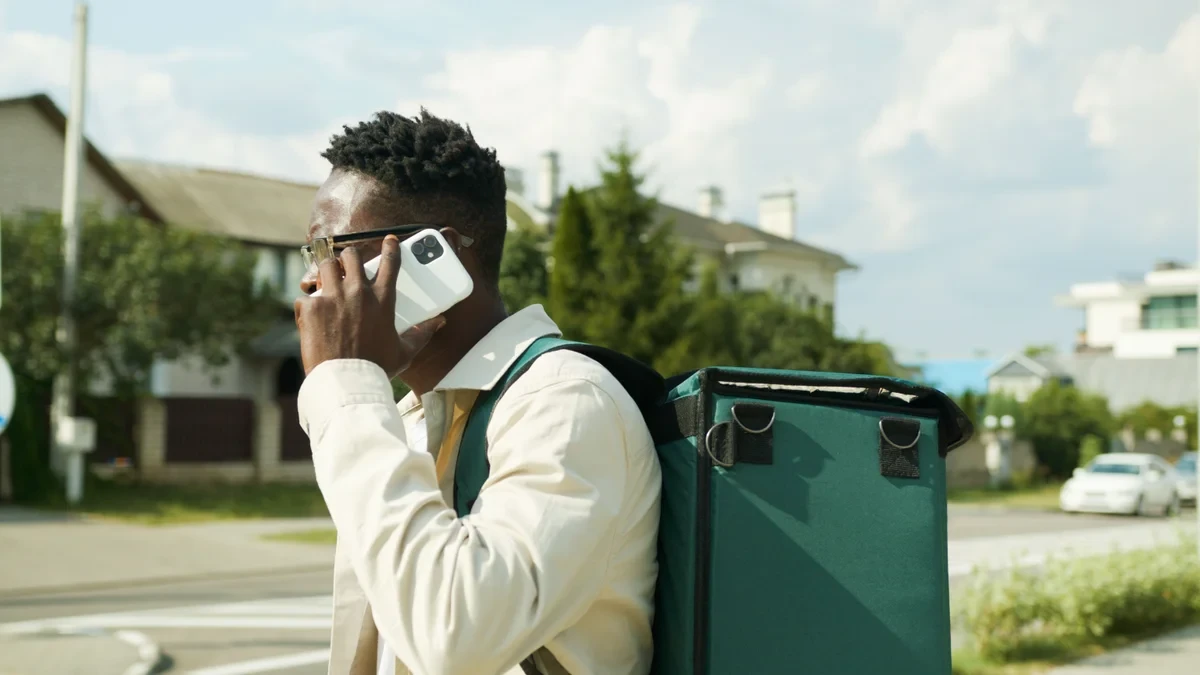
The question behind "which are the best delivery apps to work for in the US" is really "which one will pay me the most for an evening", and the honest answer is that no app tells you. Some publish a headline range, some publish a per-order minimum, and three of the six biggest publish no dollar figure at all. This guide puts what each one does say side by side, from the company's own driver or shopper pages, so you can tell a published number from a guess.
It also covers the part the sign-up pages skip: what gas, mileage and self-employment tax take out of those numbers, and which cities have any floor underneath them.
How to read a pay figure from a delivery app
Every number on a driver sign-up page is revenue, not a wage. You are an independent contractor on all six of these apps, so the money arrives before gas, insurance, vehicle wear and a 15.3% self-employment tax come out, and no employer withholds anything. The federal minimum wage of $7.25 does not apply to contractors, so outside New York City's $22.13 active-hour minimum and California's Prop 22 there is no floor: a quiet shift pays what the orders paid.
Three more things to hold onto when you compare. A range that "includes tips" is counting money the customer decides, not the company. A per-order minimum tells you the worst case for one order, not what an hour is worth. And every figure is national, so it says nothing about your city. The company-published numbers below are still the best starting point, because they are the only ones anybody is accountable for.
The six apps and what each publishes
DoorDash
The largest food delivery app in the country, available in all 50 states, and the one with the most detailed published pay model. DoorDash's Dasher pay page sets out two modes. Earn per Offer pays a base of $2 to $10 or more per offer, set by estimated time, distance and how desirable the offer is, plus 100% of the customer's tip. Earn by Time pays a guaranteed rate for active time that varies by market and is not published nationally. Peak Pay adds a fixed bonus per delivery or per hour when demand is high. In New York City, DoorDash publishes the $22.13 active-hour minimum the city's ordinance requires.
Requirements: 18 or over, any car, or a scooter or bicycle in some cities, a driver license for motor vehicles, a background check and a Social Security number. Dashers can cash out daily for a fee or get paid weekly.
Uber Eats
Uber's US delivery page publishes no dollar figure for what a delivery pays. What it does publish is the structure: you see the fare, the pickup and drop-off and the estimated time and distance before you accept a trip, the fare includes the base fare and any upfront tip the customer added at checkout, and earnings are "base fare, promotions, and tips (you keep 100% of your tips)". Instant Pay lets you cash out up to six times a day for a fee, or earnings transfer to your bank weekly.
Requirements, from the same page: 18 on a bike or on foot, 19 on a scooter or in a car, and 21 in a car in California and New York. Most two-door and four-door cars qualify. If you already drive for Uber, adding Eats is a toggle in the same app, which is the main reason to choose it over DoorDash.
Instacart
Grocery shopping and delivery, paid per batch. Instacart's shopper earnings page publishes batch minimums that depend on the market: $7 to $10 for a full-service batch where you shop and deliver, $5 for a delivery-only batch, and at least $4 for the smallest single-item batches, plus tips and promotions. Big grocery orders tip better than a single takeout bag, which is why experienced shoppers often prefer it to food delivery, but you are on your feet in a store for a good part of every hour and you carry what you bought.
Requirements: 18 or over, a car for full-service batches, and the ability to lift heavy grocery orders. A batch minimum is a floor for one order, so read it as the worst case, not the rate.
Amazon Flex
Parcel and grocery delivery for Amazon in scheduled blocks, in your own car, working out of an Amazon delivery station. Amazon publishes that "most drivers earn up to $18 to $25 an hour delivering with Amazon Flex", including tips, and the price of each block is shown before you accept it. Amazon's FAQ puts Amazon.com blocks at typically three to six hours and Amazon Fresh blocks at two to four. In most states Amazon provides a commercial auto policy while you are actively delivering during a block, which no other app on this list does, though it does not apply in New York.
Requirements are the strictest here: 21 or over, a four-door mid-size sedan or larger, and Flex only exists where there is a delivery station, so check your ZIP code in the app first. Flex routes are also longer than food deliveries, so the mile count matters more. Our Amazon Flex vs DoorDash comparison runs that arithmetic.
Grubhub
Food delivery, smaller than DoorDash and Uber Eats but with restaurant partnerships that keep orders coming in the cities where it is established. Grubhub's driver page publishes no dollar figure. It describes pay as base pay "accounting for mileage, delivery type, and time spent delivering", plus tips, of which delivery partners "always keep 100%", plus bonuses for completing missions. Earnings are available 15 minutes after a delivery and can be cashed out instantly or paid by direct deposit.
Requirements: 18 or over, or 21 in Las Vegas, with a car, motorcycle, bicycle or scooter depending on the market, a driver license and auto insurance for drivers, a state ID for cyclists, and a smartphone with a data plan.
Shipt
Target-owned grocery and retail delivery, paid per order. Shipt's shopper help center publishes no dollar figure either: each order carries "an estimated pay based on the time and effort it takes to complete the order", and shoppers receive 100% of any tip. Pay lands by direct deposit every Friday for the week before, with instant access up to three times a day once you have set up Stripe and had one weekly payout. Shipt shoppers often build a list of repeat customers, and repeat customers tip.
Shipt is car work: you are shopping a full order and carrying it to the door. Check the shopper sign-up page for the age and vehicle requirements in your state, because the pay page does not state them.
The six side by side
| App | What it publishes about pay | Vehicle | Minimum age |
|---|---|---|---|
| DoorDash | Base $2 to $10 or more per offer, plus 100% of tips, Peak Pay, Earn by Time in some markets | Car, or scooter or bike in some cities | 18 |
| Uber Eats | No dollar figure. Upfront fare including tip shown before you accept, 100% of tips | Most cars, scooter, bike, on foot in some cities | 18 bike or foot, 19 car, 21 car in CA and NY |
| Instacart | Batch minimums: $7 to $10 full-service, $5 delivery-only, at least $4 smallest, plus tips | Car | 18 |
| Amazon Flex | Most drivers earn up to $18 to $25 an hour including tips, block price fixed before you accept | Four-door mid-size sedan or larger | 21 |
| Grubhub | No dollar figure. Base pay by mileage, type and time, plus 100% of tips and mission bonuses | Car, motorcycle, bike or scooter by market | 18, 21 in Las Vegas |
| Shipt | No dollar figure. Estimated pay per order by time and effort, plus 100% of tips | Car | Not stated on its pay page |
Every dollar figure in the table is the company's own published number and is revenue before costs. None of them is a wage, and outside New York City and California nothing sits underneath them.
Which app fits which driver
You have a bike and live downtown. DoorDash, Uber Eats or Grubhub, whichever has the most restaurants in your neighborhood. Your mileage cost is close to zero, which means the published base pay is much closer to what you keep than it is for a driver.
You want to know what an evening pays before you leave the house. Amazon Flex is the only one that fixes the price up front. You need the car and the age, and a delivery station within a short drive.
You already drive for Uber. Uber Eats. Same app, same account, and you can take a food order when the ride requests dry up.
You do not mind shopping. Instacart or Shipt. Longer orders, heavier lifting, and tips that scale with the size of the cart.
You want the most work available at any hour. DoorDash. Its coverage is the widest and its published pay model is the most detailed, which also makes it the easiest to check your own numbers against.
Most drivers who do this full time run two apps: one for the committed hours and one switched on in the gaps. Track your effective hourly rate after miles on each for a month before deciding which deserves more of your week.
Costs and taxes: what comes out of the number
The gap between a published figure and what you keep has three parts.
Miles. The IRS standard mileage rate is the fair proxy for what a mile costs you in gas, wear and depreciation, and it is the rate you deduct at tax time. For 2026 it is 72.5 cents a mile for January 1 to June 30 and 76 cents a mile from July 1, so one tax year spans two rates and your log needs to show which miles fell where. A 40-mile evening at 76 cents is about $30 of cost before you have counted your time. Short-radius food delivery keeps this number down; Flex routes and suburban grocery runs push it up.
Insurance. Your personal auto policy may exclude paid delivery, and a claim during a delivery on the wrong policy can be refused. Amazon Flex covers you during a block in most states; the others offer at most liability layered over your own policy while you are on an active delivery. Ask your insurer before your first shift.
Taxes. Each app sends you and the IRS a 1099, and none of them withholds. You pay self-employment tax of 15.3% on your net profit, Social Security and Medicare combined, on Schedule SE, plus income tax on the same profit. If you expect to owe $1,000 or more, the IRS wants quarterly estimated payments. Net profit is revenue minus your deductible miles, tolls, parking and the business share of your phone, which is why a mileage log is the first app to install, before any of the six above. Our guide to the best apps for US rideshare and delivery drivers covers the trackers.
Frequently asked questions
Which delivery app pays the most in the US?
No app publishes a figure that lets you rank them. Amazon Flex publishes the highest headline, most drivers earn up to $18 to $25 an hour including tips, and fixes the price of a block before you accept it. DoorDash publishes a base of $2 to $10 or more per offer, Instacart publishes batch minimums of $4 to $10, and Uber Eats, Grubhub and Shipt publish no dollar figure at all. What you keep depends on your city, your hours, your tips and your miles.
Which delivery apps can you do at 18?
DoorDash, Grubhub and Instacart take drivers from 18, and Uber Eats takes bike and on-foot couriers from 18. Uber Eats car and scooter couriers must be 19, or 21 in California and New York, Grubhub asks for 21 in Las Vegas, and Amazon Flex requires 21 everywhere.
Can you deliver without a car?
Yes, on some apps and in some cities. DoorDash, Uber Eats and Grubhub accept bicycles and scooters in markets where they make sense, and Uber Eats also takes on-foot couriers in some cities. Amazon Flex, Instacart and Shipt are car work: a Flex block or a full grocery order does not fit on a bike.
Is there a minimum wage for delivery app drivers?
Not in most of the country. The apps treat you as an independent contractor, and the federal minimum wage of $7.25 does not apply to contractors. The exceptions are New York City, where app delivery workers have a published minimum of $22.13 per hour of active time, and California, where Prop 22 guarantees 120% of the applicable minimum wage for engaged time plus 37 cents an engaged mile on DoorDash, Uber Eats, Instacart and Shipt.
How do taxes work for delivery app drivers?
Each app reports what it paid you to the IRS on a 1099 and withholds nothing. You pay self-employment tax of 15.3% on your net profit plus income tax, usually through quarterly estimated payments, and you deduct business miles at the IRS standard rate, 72.5 cents a mile through June 30, 2026 and 76 cents from July 1.
Start with the one that publishes a number
Three of these six will not tell you what an order pays until you are looking at it in the app, so start with one that does, run your own miles against it for a couple of weeks, and let that rate decide where the rest of your hours go. The Amazon Flex vs DoorDash comparison is the place to begin. If you would rather see who is hiring drivers in your city right now, Service Club ® lists the open roles and the form below takes a minute.