
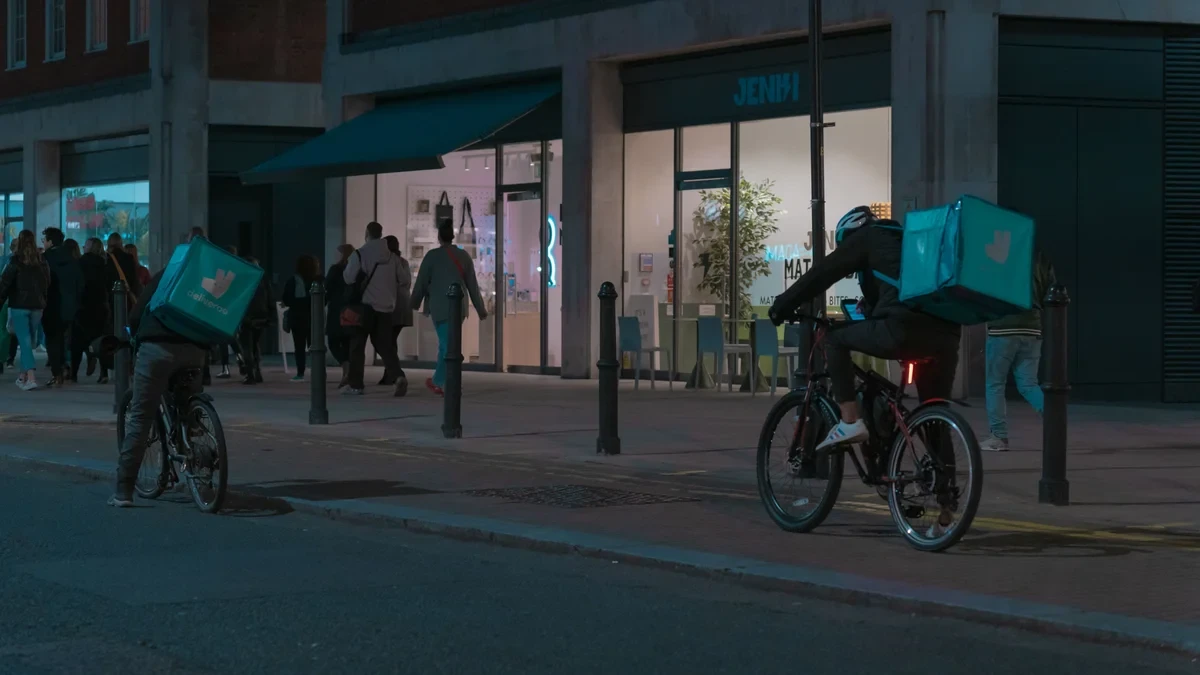
Food delivery is among the most accessible flexible work in the UK. The major platforms take on new couriers without formal qualifications, you choose your own hours, and most pay weekly. The trade-off is real and worth stating up front: you are self-employed, so there is no income guarantee, no holiday pay and no employer behind a quiet Tuesday.
This guide covers which platforms are hiring in 2026, what each one pays before costs, which vehicles they accept, and what you need to get started.

Which platforms are hiring food delivery drivers in the UK?
Just Eat
The largest food delivery network in the UK by restaurant count. You collect takeaway orders from restaurants and deliver them to customers, usually within a one to three mile radius. Bicycle, moped and car are all accepted, pay is per delivery, and there is no exclusivity requirement, so you are free to run other apps alongside it. Our Just Eat courier breakdown goes into the detail.
Deliveroo
Deliveroo covers a wide spread of UK towns and cities rather than only the largest ones. Sign-up includes a right-to-work check and document verification, usually turned around in a few working days. Bicycle, e-bike, moped, motorcycle and car are all accepted. Deliveroo is also the only one of the four with a published pay floor, agreed with the GMB union; our Deliveroo driver pay guide explains how it works.
Uber Eats
Strongest in the major cities, including London, Manchester, Birmingham and Leeds. Its pay model includes in-app tipping, which adds a variable but genuinely meaningful stream on top of delivery fees. Bicycle, moped and car riders are accepted, though note the age rule below differs by vehicle. We have a fuller assessment in is driving for Uber Eats worth it.
Stuart
Stuart handles retail and B2B deliveries alongside restaurant orders, which tends to suit couriers who prefer longer, more structured delivery windows to the short-burst restaurant rush. Its own courier pages list bicycle, motorcycle and electric vehicle delivery.
Amazon Flex
Worth knowing about, but it is not takeaway work. Flex is parcel and grocery delivery, paid per booked block of two to four hours rather than per order, and it requires a car or van. It appears in the table below because drivers routinely weigh it against food platforms, not because it is one.
What food delivery driver jobs pay
Every food platform here pays per delivery, not per hour. What you actually take depends on order volume, distance and time of day, so any hourly number is an effective rate rather than a wage.
| Platform | Revenue per active hour | Tips | Vehicles accepted |
|---|---|---|---|
| Just Eat | £8 to £13 | In-app tipping | Bicycle, moped, car |
| Deliveroo | £8 to £14 | Occasional in-app tips | Bicycle, e-bike, moped, car |
| Uber Eats | £9 to £15 | Consistent in-app tips | Bicycle, moped, car |
| Stuart | £10 to £16 | No in-app tipping | Bicycle, motorcycle, electric vehicle |
| Amazon Flex | £14 to £18 | No tipping | Car, van |
Read that table carefully, because three things about it matter more than the numbers themselves.
On a car, hire and reward insurance alone is £800 to £1,500 a year, which is roughly £3 to £6 off every working day before you have moved. Outside peak, Monday to Thursday afternoons and late nights, earnings fall sharply on every platform on that list. For a fuller treatment of what parcel and food work nets out at, see the delivery driver pay guide and our platform comparison.
What vehicle do you need for food delivery work?
Bicycle
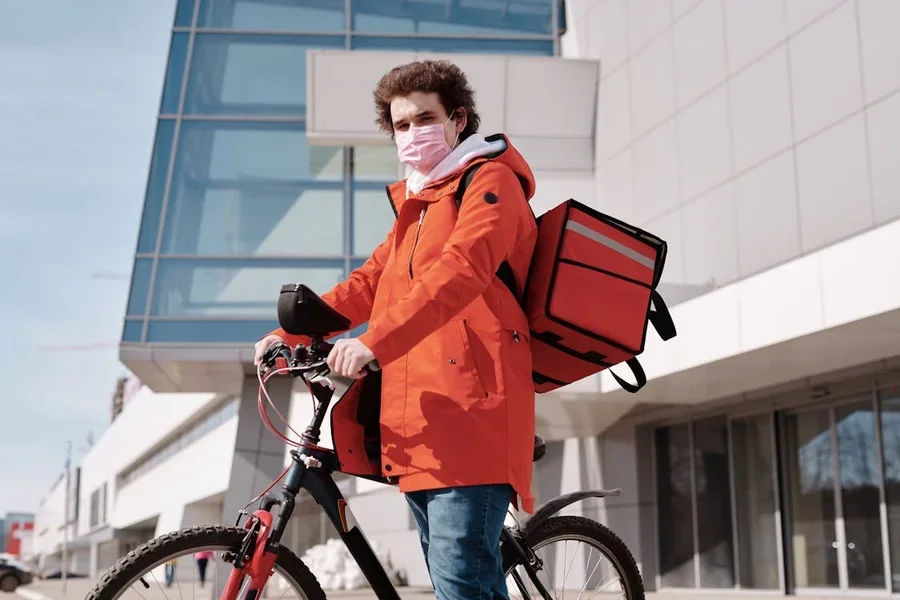
Accepted by Just Eat, Deliveroo, Uber Eats and Stuart, and the lowest barrier to entry there is. No hire and reward insurance required, only public liability cover at £50 to £200 a year. Well suited to dense city centres, where congestion slows mopeds and cars down and parking costs a car driver minutes on every drop. E-bikes are accepted across all the major platforms and extend your viable radius without changing the insurance position. If two wheels suit you, our guide to bike delivery jobs covers it properly.
Moped or motorcycle
Accepted by Just Eat, Deliveroo, Uber Eats and Stuart. You need hire and reward insurance on top of your standard road cover, typically £400 to £900 a year depending on age, experience and vehicle value. Faster than cycling once drops run beyond a mile or so from the restaurant.
Car
Accepted everywhere on the list. Full driving licence and hire and reward insurance required, at £800 to £1,800 a year for food delivery work. More comfortable over longer distances and the only realistic option where cycling is not practical, but less efficient in city centres once you factor in parking.
If you already own a bicycle and live in a city, you can usually be working within a week of applying. If you need to arrange hire and reward cover for a moped or car, add another one to two weeks.
What you need to start
Requirements are broadly consistent across platforms, with one important exception.
Age. 18 is the baseline. Just Eat and Deliveroo both require couriers to be 18 or over. Uber Eats is the exception worth checking before you apply: it accepts cyclists at 18 but requires couriers to be 19 to deliver by car. Identity verification during sign-up enforces whichever rule applies.
Right to work in the UK. Every major platform checks this. Accepted documents include a UK or Irish passport, EU settlement scheme documentation, or a visa permitting self-employment.
A smartphone. Everything runs through a courier app, so you need a current iOS or Android handset and a data plan you can rely on mid-shift.
A UK bank account. Most platforms pay weekly and all of them pay into a UK account.
Insurance. Cyclists need public liability cover only. Moped, motorcycle and car couriers need hire and reward insurance in place before the first shift, not after.
Background checks. Just Eat runs a criminal record and right-to-work check, and Uber Eats requires couriers to pass a background screening. Build the turnaround into your plans.
What the work actually involves
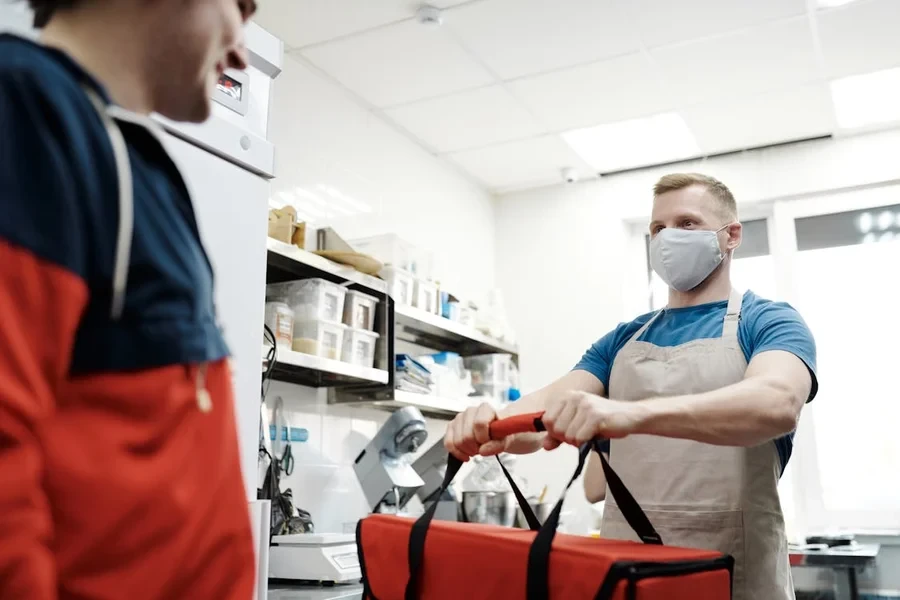
Food delivery runs to a predictable rhythm. Demand peaks at lunch, roughly 12pm to 2pm, and again at dinner, roughly 6pm to 10pm. Friday and Saturday evenings are the highest-volume periods of the week on every platform.
Outside those windows, order volume drops off hard. Experienced couriers use the dead time to rest, charge a phone, or sit logged into a second app to catch overflow.
Most city-centre drops fall within one to three miles. Longer runs are more common in suburban and rural zones, where fewer restaurants are spread across more ground.
Weather moves demand reliably in one direction. Wet evenings produce more orders, because people who would have gone out order in instead. Plenty of couriers actively target bad-weather shifts for exactly that reason.
Every food delivery platform here classes couriers as self-employed. That means you register with HMRC, file a self-assessment return each year, and pay income tax and National Insurance on your net profit rather than your gross takings. Keep records of earnings and work-related expenses, mileage, insurance, equipment and phone costs among them, from your first shift, because they reduce the profit you are taxed on.
How to earn more
Log on before peak, not during it. Get online 30 minutes ahead of the lunch or dinner rush. The initial surge is where order density is highest and waiting time is lowest.
Protect weekend evenings. Friday and Saturday dinner shifts generate the most volume on every major platform. If your schedule flexes at all, flex it towards those.
Run two apps. Signing up to two platforms and running both cuts the gaps between orders, because when one is quiet the other often is not. It is entirely legal, widely practised, and the single most reliable way couriers lift their effective hourly rate.
Pick your zone on restaurant density. Restaurants per square mile is the number that predicts your hourly rate. A compact centre with many kitchens close together beats a wide area with a handful spread across it.
Log off in the dead hours. Sitting online through a quiet Tuesday afternoon earns nothing while your costs continue. Track your running average and come off when it drops below a rate worth your time.
Food delivery driver job FAQs
What is the best food delivery company to work for in the UK?
There is no single answer, which is why most experienced couriers sign up to several and switch on live demand. Just Eat has the widest restaurant coverage, particularly outside London. Uber Eats tends to produce higher effective rates in major cities because consistent in-app tipping adds a real supplement. Stuart pays more per delivery where it operates but covers fewer places.
Can I do food delivery with a bicycle?
Yes, and in a dense city centre it is often the better choice. Just Eat, Deliveroo, Uber Eats and Stuart all accept cyclists, with no hire and reward insurance needed. Cyclists frequently match or beat moped riders on drops per hour in congested centres because they filter through traffic and park anywhere. E-bikes are accepted too and widen your radius.
How much do food delivery drivers earn per hour in the UK?
Indicatively £8 to £16 an hour of active delivery time depending on platform, vehicle and location, with city couriers on weekend dinner shifts at the top of that. Treat those as gross revenue rather than wages: fuel, insurance, vehicle wear and tax come out, and there is no minimum wage underneath a quiet shift.
Do I need to tell HMRC about food delivery work?
Yes. All the platforms here treat couriers as self-employed, so you register with HMRC and file a self-assessment return covering your delivery income. Keep expense records from day one, because mileage, insurance and equipment reduce your taxable profit.
Is food delivery a good job?
For flexible income without formal qualifications, it works well. As reliable primary income it demands discipline about when you work: couriers who target peaks, run two apps and protect weekend evenings do substantially better than couriers who log on whenever it happens to suit. If you are weighing it up properly, start with becoming a delivery driver in the UK.
Start where your vehicle takes you
A bicycle and a dense city centre is the cheapest way in. A car opens every platform on the list and adds an insurance bill from day one. Whichever it is, sign up to two platforms rather than one, work the peaks, and keep the mileage log from the first shift. If you want to see which of them are hiring near you, the form below takes a minute.